


Introduction
Changing a job is one of the most important decisions in a career. It can improve your salary, skills, and life. But it can also create stress, confusion, or instability if not planned properly. Many people change jobs only for higher pay, but later they feel stuck or unhappy because they did not assess the risks before moving.
In this article, we will understand how to assess risk in job changes in a simple and practical way. This will help you make better and safer career decisions.
How to Assess Risk in Job Changes?
1. Job Security Risk
The first thing you should check is how stable the company is.
Ask these questions:
- Is the company new or established?
- Is it making profit or loss?
- Has it recently fired employees?
- Does it depend on only one client or product?
A stable company usually has:
- Regular income
- Multiple clients or products
- Long-term growth plans
A risky company may show signs like:
- Frequent layoffs
- Sudden changes in management
- Unclear business model
If the company is unstable, your job security is also at risk.
2. Role Clarity Risk
Many people join a job without fully understanding their role. This creates confusion later.
Ask:
- Is the job description clear?
- Do I know my daily tasks?
- Who will evaluate my performance?
- What are my goals in first 3–6 months?
If answers are unclear, it is a warning sign.
Why this is risky:
- You may be assigned extra work later
- Your performance may not be judged fairly
- You may feel lost or stressed
A clear role helps you perform better and feel confident.
3. Growth Risk
A job should help you grow. If there is no learning, your career can become stuck.
Ask:
- Will I learn new skills in this job?
- Is this skill relevant for future jobs?
- Will I get training or mentorship?
- Is there promotion opportunity?
Low-risk job:
- You learn new tools
- You improve skills
- You get experience that is valuable in market
High-risk job:
- Same repetitive work
- No skill improvement
- No future career growth
A job with no learning is risky for long-term success.
4. Compensation Risk in Job Changes
Money is important, but stability is more important than just high salary.
Ask:
- Is salary fixed or variable?
- Is payment on time?
- Are bonuses guaranteed or performance-based?
- Are there hidden deductions?
Financial risk signs:
- Delay in salary payments
- Mostly commission-based income
- Unclear salary structure
Safer situation:
- Fixed monthly salary
- Clear payment date
- Written offer letter
A stable income reduces financial stress in life.
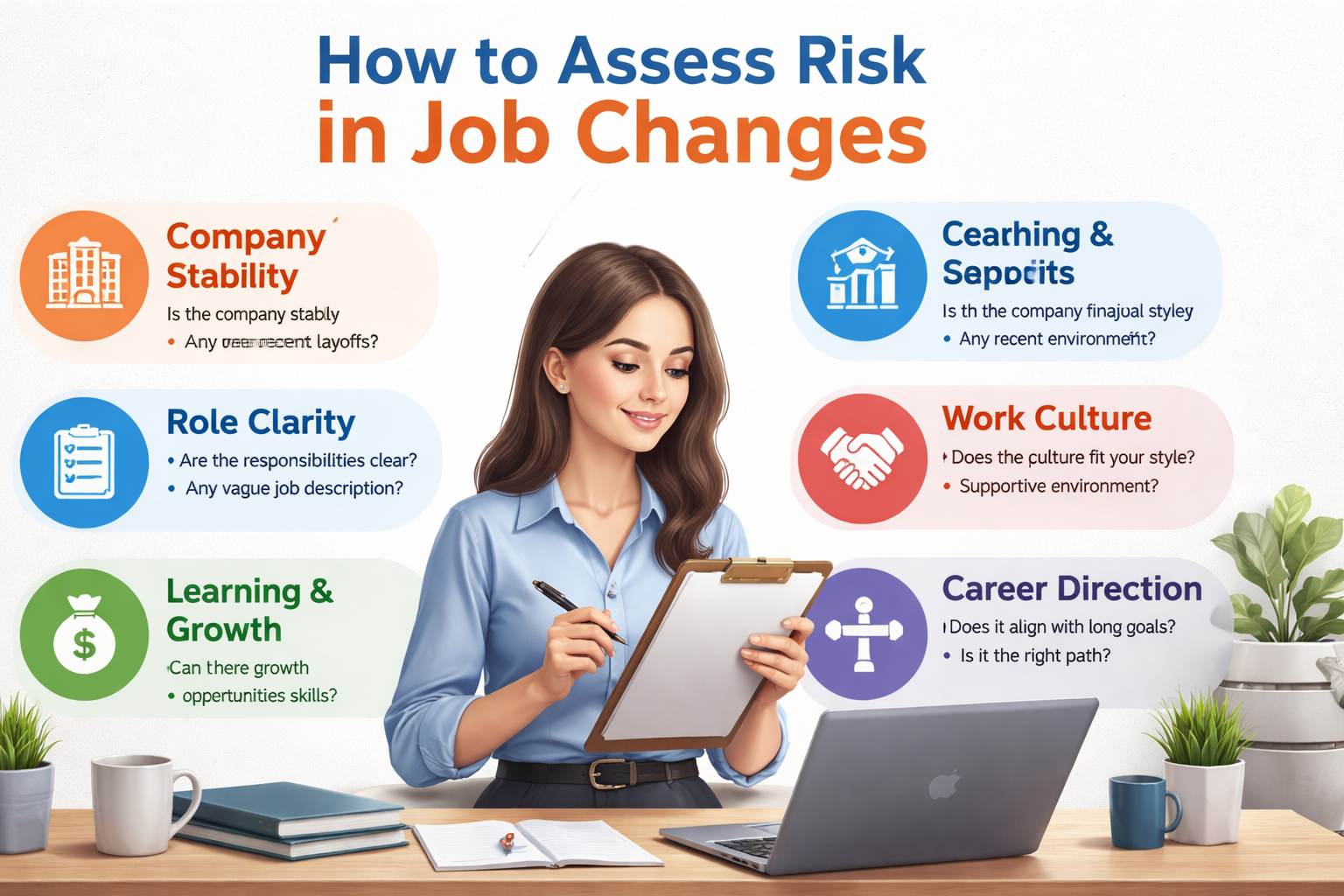
5. Cultural Fit Risk
Work culture means how people behave and work in a company.
Ask:
- Are employees happy or stressed?
- Is management supportive?
- Is there respect and communication?
- Are working hours reasonable?
High-risk culture:
- Toxic environment
- Micromanagement
- Unrealistic deadlines
- Poor communication
Healthy culture:
- Supportive team
- Clear communication
- Balanced workload
Even a good salary cannot fix a bad work culture.
6. Career Direction Risk
Sometimes a job looks good now, but it may not help your long-term goals.
Ask:
- Does this job match my career goal?
- Will this experience help me in future roles?
- Am I moving forward or sideways?
Example:
If you want to become a content writer but take a job in unrelated field just for money, you may lose direction.
Wrong direction increases long-term career risk.
Conclusion
Assessing risk in job changes is not about avoiding change. It is about making smart and safe decisions.
A good job change should:
- Increase your skills
- Improve your financial stability
- Match your career goals
- Provide a healthy work environment
If you ignore risk, even a high-paying job can become stressful. But if you understand risk properly, you can choose a job that supports your long-term success.
Always remember: A good job is not just about getting hired. It is about staying, growing, and succeeding in the right direction.
“Assess your job change risks more confidently and find better-matched opportunities on Best Job Tool — make your next move smarter, not riskier.”
You can explore more such blogs here.





Comments
Be the first to leave a comment.