

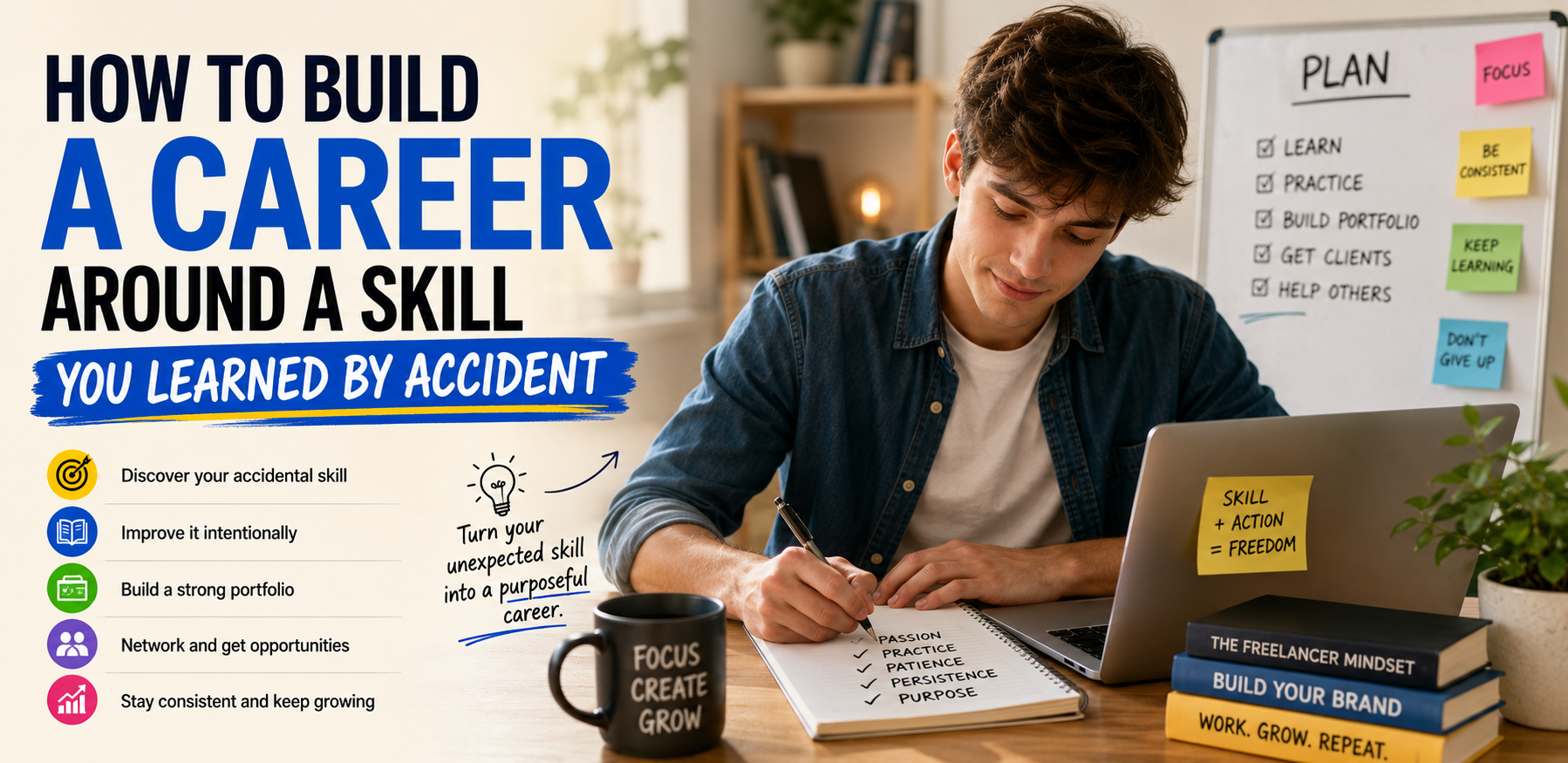
Introduction: Build a Career Around a Skill
Many people spend years trying to find the right career. They take courses, earn degrees, and follow traditional career paths. However, sometimes the most valuable skill is not something learned in a classroom. It is something learned by accident.
You may have learned graphic design while creating posters for a school event. You may have become good at writing by posting online regularly. Maybe you learned video editing while making content for social media. Some people learn customer service while helping in a family business. Others develop leadership skills while organizing community events.
At first, these skills may seem like hobbies or small activities. But over time, they can become valuable professional skills. Many successful careers have started from accidental learning experiences.
The important thing is recognizing the value of the skill and finding ways to turn it into a career. In this article, we will discuss how to build a career around a skill you learned by accident.
How to Build a Career Around a Skill You Learned by Accident?
1. Identify the Skill Clearly
The first step is identifying exactly what skill you have learned.
Many people underestimate their abilities because they learned them naturally. Since the skill came easily, they assume everyone can do it.
Ask yourself:
- What activities do people often ask me for help with?
- What tasks do I enjoy doing?
- What have I spent many hours practicing?
- What compliments do I receive regularly?
For example, you might think you are simply helping friends with resumes. In reality, you may have strong resume writing skills.
You might believe you are just posting on social media for fun. However, you may have developed social media marketing skills.
Understanding the exact skill is important because it helps you explore career opportunities related to it.
2. Understand the Market Value of the Skill
Not every skill creates the same career opportunities. Therefore, you need to understand how businesses and clients use your skill.
Research industries where your skill is valuable.
For example:
- Writing skills can lead to content writing, copywriting, blogging, and editing.
- Graphic design skills can lead to branding, advertising, and digital marketing.
- Video editing skills can lead to content creation and media production.
- Communication skills can lead to customer support, sales, and consulting.
Look at job descriptions on employment websites. Check freelance platforms and professional networking sites.
You will quickly discover whether companies are paying for the skill you possess.
This research helps you understand how your accidental skill can become a professional service.
3. Improve the Skill Intentionally
Learning by accident is a good start, but professional success requires intentional improvement.
Once you realize the skill has value, begin learning it seriously.
Read books, watch tutorials, attend workshops, and follow industry experts.
For example, if you accidentally learned content writing through blogging, you can study:
- SEO writing
- Copywriting
- Content marketing
- Editing techniques
If you learned graphic design on your own, you can study:
- Design principles
- Typography
- Branding
- User experience
Professional growth happens when natural experience combines with structured learning.
The more you improve, the more opportunities become available.
4. Build a Portfolio
A portfolio is proof of your abilities.
Many employers care more about what you can do than how you learned it.
Create a collection of your best work.
If you are a writer, include articles, blogs, and published content.
If you are a designer, include logos, posters, and design projects.
Or if you are a video editor, include editing samples.
Even personal projects can be added to a portfolio if they demonstrate your skills effectively.
A strong portfolio shows potential clients and employers that you can deliver results.
It also builds confidence because you can clearly see your progress and achievements.
5. Share Your Work Publicly
Many opportunities come from visibility.
If nobody knows about your skill, it becomes harder to build a career around it.
Share your work on platforms where your target audience spends time.
You can use:
- Personal websites
- Portfolio websites
- Blogs
- Social media platforms
For example, writers can publish articles online.
Designers can share projects and creative work.
Video editors can post before-and-after editing examples.
Regular sharing helps people discover your skills.
It can also attract clients, employers, and professional connections.
6. Learn How Professionals Use the Skill
Having a skill is one thing. Using it professionally is another.
Study people who already earn money using the same skill.
Observe:
- Their services
- Their pricing
- Their portfolios
- Their marketing methods
- Their client communication
This helps you understand industry standards.
For example, a person who enjoys writing poems may discover opportunities in content writing, copywriting, script writing, or editing.
A person who enjoys photography may learn about commercial photography, product photography, or event photography.
Learning from professionals reduces mistakes and helps you build a realistic career plan.
7. Start with Small Projects
You do not need a perfect career plan before getting started.
Begin with small projects.
Offer your services to friends, local businesses, nonprofit organizations, or small clients.
These projects provide valuable experience.
You learn:
- Client communication
- Time management
- Project delivery
- Handling feedback
Small projects often lead to bigger opportunities.
A satisfied client may recommend you to others.
Each completed project increases your confidence and strengthens your portfolio.
Conclusion: Build a Career Around a Skill
Building a career around a skill you learned by accident is completely possible. In fact, many successful professionals started exactly that way. The key is recognizing the value of your skill, improving it intentionally, building a portfolio, gaining experience, and sharing your work with others.
Whether you accidentally learned writing, design, communication, marketing, video editing, or any other skill, it can become the foundation of a rewarding career. Stay curious, keep learning, and remain consistent. What started as an unexpected skill may eventually become the career that changes your future.






Comments
Be the first to leave a comment.