

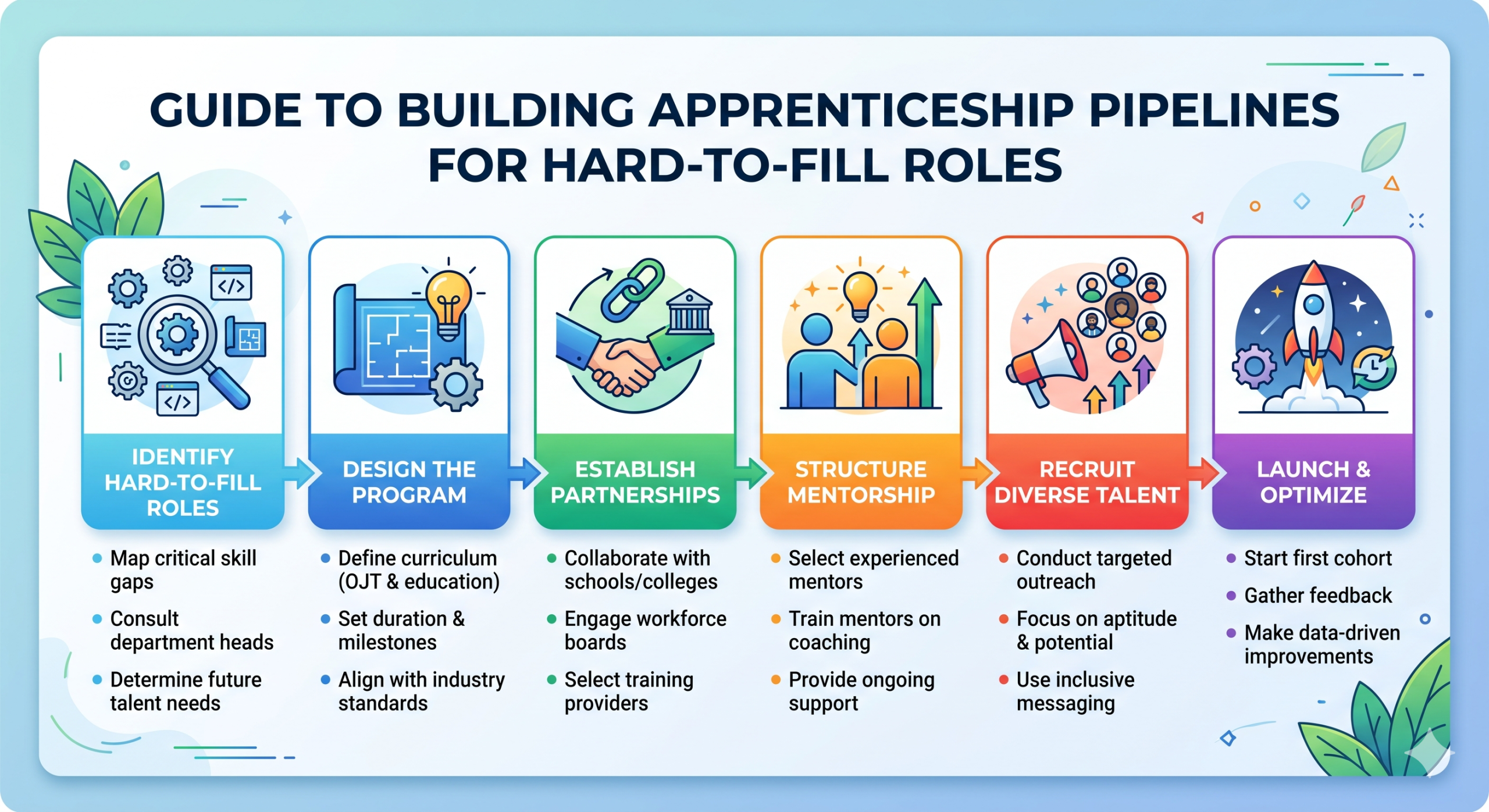
Hiring for specialized positions has become increasingly challenging across industries. Whether organizations are searching for skilled technicians, IT professionals, healthcare workers, cybersecurity analysts, or advanced manufacturing talent, the shortage of qualified candidates continues to widen. Traditional recruitment methods often fail to meet workforce Apprenticeship demands, forcing businesses to rethink their hiring strategies.
One of the most effective long-term solutions is building apprenticeship pipelines. Rather than competing for a limited pool of experienced professionals, organizations can develop talent internally by combining structured training with real-world work experience. Apprenticeship programs help employers close skills gaps, improve employee retention, and create a sustainable talent pipeline.
As remote work, digital learning, travel testing for field-based roles, and workforce mobility continue to evolve, apprenticeship programs have become more flexible than ever. This guide explains how organizations can successfully design and implement apprenticeship pipelines for hard-to-fill roles while supporting long-term business growth.
Why Apprenticeships Are Becoming a Strategic Hiring Solution
Many organizations rely heavily on experienced hires, but this approach often results in longer hiring cycles, higher recruitment costs, and increased competition.
Apprenticeships solve these challenges by allowing employers to train individuals according to company-specific requirements while building loyalty from the beginning of their careers.
Key advantages include:
- Reduced hiring costs
- Faster workforce development
- Improved employee retention
- Stronger organizational culture
- Better succession planning
- Increased workforce diversity
- Reduced dependency on external hiring
Instead of waiting for qualified candidates to become available, companies create their own future workforce.
Identify Roles That Benefit Most from Apprenticeships
Not every position requires an apprenticeship, but many hard-to-fill roles are ideal candidates.
Examples include:
Technology
- Software Developer
- Cybersecurity Analyst
- Cloud Support Engineer
- Data Analyst
- IT Support Specialist
Skilled Trades
- Electrician
- HVAC Technician
- Industrial Maintenance Technician
- CNC Operator
- Mechanical Technician
Healthcare
- Medical Assistant
- Pharmacy Technician
- Laboratory Technician
- Healthcare Administrator
Business Operations
- Digital Marketing Specialist
- Customer Success Associate
- Sales Development Representative
- Finance Assistant
- HR and People Operations Coordinator
Analyze hiring data to identify positions with:
- High vacancy rates
- Long hiring timelines
- Frequent turnover
- Limited qualified applicants
- Specialized skill requirements
These roles often provide the greatest return on apprenticeship investments.
Design a Structured Apprenticeship Framework
Successful apprenticeship programs require more than on-the-job training. A structured framework ensures apprentices gain practical experience while developing measurable competencies.
A strong program should include:
Learning Objectives
Define the technical and professional skills apprentices should master.
Examples include:
- Industry-specific software
- Equipment operation
- Compliance procedures
- Communication skills
- Problem-solving techniques
- Project management basics
Training Timeline
Create a phased learning plan.
For example:
- Month 1–2: Orientation and foundational skills
- Month 3–6: Guided project work
- Month 7–9: Independent responsibilities
- Month 10–12: Advanced assignments and final evaluation
Structured milestones keep both apprentices and managers aligned.
Mentorship
Assign experienced employees as mentors.
Mentors should:
- Provide regular coaching
- Monitor progress
- Answer technical questions
- Offer career guidance
- Conduct feedback sessions
Strong mentorship significantly improves completion rates and employee engagement.
Build Partnerships with Educational Institutions
Educational partnerships create a consistent source of future talent.
Collaborate with:
- Universities
- Community colleges
- Technical institutes
- Vocational schools
- Industry certification providers
Partnerships can include:
- Internship-to-apprenticeship pathways
- Guest lectures
- Career fairs
- Curriculum collaboration
- Capstone projects
- Employer-sponsored certifications
Working closely with educational institutions ensures apprentices graduate with skills aligned to employer needs.
Adapt Apprenticeships for Remote and Hybrid Work
Many modern apprenticeships no longer require employees to work entirely on-site.
Remote and hybrid apprenticeship models allow organizations to access talent from wider geographic regions.
Remote apprenticeship practices include:
- Virtual onboarding
- Online learning platforms
- Digital collaboration tools
- Weekly video mentoring sessions
- Cloud-based project management
- Remote skills assessments
For apprentices who occasionally travel for training, conferences, or client visits, employers should establish clear travel testing procedures and compliance guidelines to ensure smooth workforce mobility.
Flexible apprenticeship models also improve accessibility for candidates balancing education, family responsibilities, or geographic limitations.
Measure Success with Clear Performance Metrics
Tracking outcomes helps organizations continuously improve apprenticeship programs.
Useful metrics include:
- Program completion rate
- Full-time conversion rate
- Employee retention
- Time-to-productivity
- Hiring cost savings
- Internal promotion rate
- Apprentice satisfaction
- Manager satisfaction
Collect regular feedback from apprentices, mentors, and supervisors to identify opportunities for improvement.
Organizations that measure program performance can demonstrate long-term business value and secure ongoing leadership support.
Financial Planning for Sustainable Apprenticeship Programs
Building apprenticeship pipelines requires investment, but careful financial planning ensures long-term success.
Consider budgeting for:
- Training materials
- Learning management systems
- Mentor compensation
- Certification fees
- Technology resources
- Productivity during training
- Recruitment marketing
Although initial costs may seem significant, apprenticeship programs often reduce long-term recruitment expenses by lowering turnover and minimizing reliance on external hiring agencies.
Businesses should also explore government incentives, workforce development grants, and industry partnerships that help offset program costs.
Investing strategically today creates a reliable pipeline of skilled employees for years to come.
Finding and Attracting High-Potential Apprentices
Recruiting apprentices requires a different approach than hiring experienced professionals.
Employers should focus on potential rather than existing expertise.
Look for candidates who demonstrate:
- Curiosity
- Adaptability
- Communication skills
- Problem-solving ability
- Reliability
- Learning mindset
- Team collaboration
Expand recruitment efforts through:
- College career centers
- Technical schools
- Online communities
- Professional networking events
- Employee referral programs
- Community organizations
Organizations hiring globally or remotely can also use the best job tool, a global job platform, to connect with motivated candidates seeking apprenticeship opportunities across industries and locations.
Clear job descriptions that emphasize learning, mentorship, and career growth often attract stronger applicants than listings focused solely on technical qualifications.
Creating Long-Term Career Pathways
An apprenticeship should represent the beginning of a career—not a temporary training program.
Provide apprentices with a transparent progression plan, such as:
- Apprentice
- Junior Specialist
- Associate
- Mid-Level Professional
- Senior Specialist
- Team Lead
- Manager
Employees who understand their future opportunities are more likely to remain with the organization and continue developing their skills.
Supporting continuous learning through certifications, leadership development, and cross-functional projects further strengthens retention and prepares future leaders from within.
Professionals searching for organizations that invest in career development can explore opportunities through the best job tool, a global job platform connecting job seekers with employers that prioritize structured learning and long-term workforce growth.
Conclusion
Apprenticeship pipelines have become one of the most effective solutions for addressing hard-to-fill roles in today’s competitive labor market. By developing talent internally, organizations reduce hiring challenges, improve retention, and build a workforce equipped with skills tailored to their specific business needs.
A successful apprenticeship strategy combines structured learning, experienced mentorship, educational partnerships, remote collaboration, productivity tracking, travel testing readiness for mobile roles, and sound financial planning. These elements create a scalable talent pipeline that supports both organizational growth and employee success.
As skills shortages continue across industries, companies that invest in apprenticeship programs today will be better positioned to meet future workforce demands. Leveraging platforms like the best job tool can also help employers reach ambitious candidates ready to learn, grow, and contribute to long-term business success.






Comments
Be the first to leave a comment.