

Introduction
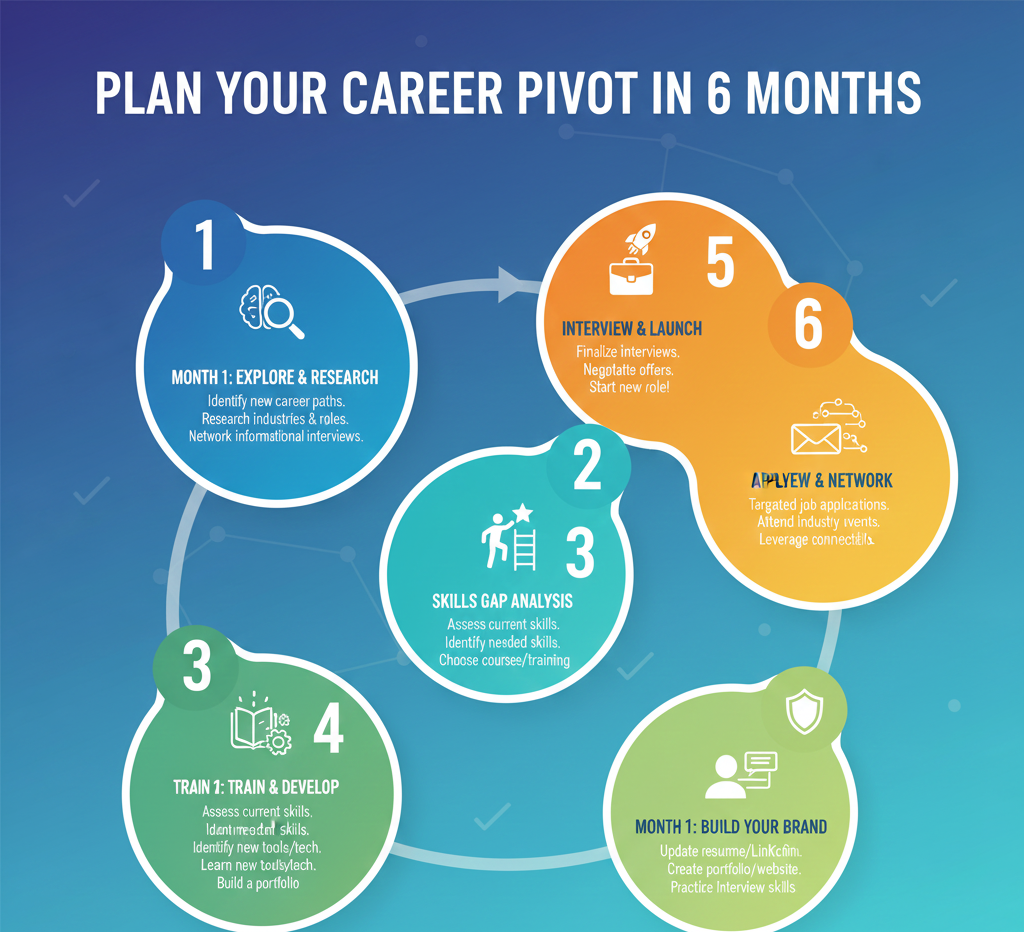
Career paths today look nothing like they did even a decade ago. Automation, AI, remote work, and new industries have changed the way professionals grow and succeed. Many people realize that the job they started is no longer the one they want to continue, yet making a career switch feels overwhelming. Planning a career pivot in 6 months gives professionals direction, structure, and clarity. Instead of jumping blindly, they work through a calculated roadmap that reduces risks and increases the chances of landing the right role.
People change careers for many reasons. Some want better income or work-life balance. Others feel stuck in a job that doesn’t match their strengths. A growing group simply wants to move toward something meaningful and future-proof. Whatever the reason, a structured career pivot plan helps professionals move from intention to accomplishment. A six-month timeline is realistic because it gives time to research options, learn new skills, build a portfolio, connect with the right people, and prepare for interviews without burning out or rushing.
Career transitions require honesty, commitment, and consistent learning. When approached correctly, they do not require quitting your current job. Many professionals pivot while working full-time. The key is setting milestones, staying disciplined, and tracking progress. This guide explains how to plan a career pivot in six months with practical steps, real examples, and proven strategies. Whether someone wants to transition from retail to IT, sales to digital marketing, mechanical engineering to product management, or any other path, this six-month framework makes the goal achievable.
1. Month One: Assessing Where You Stand and Where You Want to Go
Understand Your Motivation
Every successful career pivot starts with understanding the “why.” Professionals need clarity about what they want to change and what matters most in the next stage of their career. Some realize they crave creativity after years in analytical roles, while others want stability, higher income, or meaningful growth. Writing down these motivations helps maintain direction when the process becomes challenging. A strong purpose becomes the compass for the months ahead.
Evaluate Your Current Strengths and Skills
A career change does not mean starting from zero. Most professionals already possess skills that can transfer into a new industry. Communication, leadership, teamwork, research, problem-solving, and customer interaction hold value across most roles. Evaluating what you already have highlights the gap between current abilities and the expectations of your target career. This gap becomes the foundation of your learning plan for the next few months.
Research Your Target Roles and Industries
Once you understand where you want to go, the next step is researching the destination. Job descriptions on LinkedIn, Indeed, or Naukri help identify commonly required skills. Industry publications and company blogs reveal market trends and hiring demand. Talking to people in the field gives first-hand insights into realities that job postings don’t always mention. This research phase is critical because it aligns expectations with actual industry requirements and provides direction for learning.
2. Month Two: Building a Structured Learning and Upskilling Plan
Choose the Best Learning Format for Your Situation
Different professionals have different schedules and learning preferences. Some prefer structured online courses from platforms like Coursera, Udemy, or Google Career Certificates. Others learn better through hands-on bootcamps, YouTube channels, or reading blogs and documentation. Selecting the right format ensures learning becomes consistent instead of irregular. Many professionals choose a mix—online courses for structure and self-study for depth. The goal is regular learning that fits within a busy work schedule.
Focus on High-Value Skills First
After identifying the skill gap, professionals should start with the most essential abilities needed for their new field. For example, someone transitioning into data analysis may begin with Excel or SQL before learning Python. A marketing pivot may start with understanding buyer psychology before diving into Meta Ads or SEO. Learning the fundamentals builds confidence and allows learners to progress into more complex topics without feeling overwhelmed.
Track Progress Weekly
Tracking progress makes the learning journey measurable and motivating. A six-month pivot can feel long, but weekly goals keep momentum strong. Professionals can dedicate evenings or weekends to learning, completing one or two modules per week. Progress tracking also helps identify areas needing more time and revision. Structured evaluation ensures the six-month plan remains realistic, organized, and balanced with full-time work responsibilities.
3. Month Three and Four: Gaining Real Experience and Building a Portfolio
Start Applying Knowledge to Practical Projects
Learning is valuable, but application builds proof of ability. Professionals should begin creating small projects that showcase their growing skills. A data analyst could analyze a dataset and produce actionable insights. A digital marketer might run a small ad campaign or build a content strategy. UX designers could redesign an existing website or draft a mobile app interface. These projects become early portfolio entries that demonstrate initiative and competence.
Participate in Internships, Freelance Work, or Volunteer Projects
Many career switchers worry that companies want experience before offering a job. Gaining small real-world projects solves this problem. Freelance platforms like Upwork or Fiverr offer paid entry opportunities. Non-profit organizations accept volunteers for marketing, administration, or tech roles. Some professionals even collaborate with small businesses in their network. Instead of waiting for experience, they create it. Over time, these small assignments become strong resume achievements.
Build a Strong Portfolio Website or Collection
Employers today prefer proof of skills over theoretical claims. A portfolio website, GitHub repository, Behance profile, or LinkedIn featured section showcases completed projects and helps hiring managers evaluate your capabilities quickly. Each project should include context, problems addressed, the approach taken, and results achieved. A strong portfolio tells a compelling story about growth and readiness for the new field.
4. Month Five: Networking, Personal Branding, and Market Positioning
Leverage LinkedIn to Build Visibility
LinkedIn is one of the most powerful tools for career pivot success. Updating the profile headline, summary, and skills signals the direction of your new career path. Consistently sharing content positions you as someone serious about learning and contributing to the field. Many professionals share weekly posts about projects, learning updates, industry insights, or small case studies. This builds credibility and attracts the attention of recruiters, hiring managers, and industry peers.
Connect with People in the Target Industry
Networking becomes easier when approached with genuine curiosity. Instead of asking for a job right away, start with informational conversations. Commenting on industry posts, joining LinkedIn groups, attending virtual meetups, or participating in Slack communities builds familiarity without pressure. Many opportunities emerge through relationships rather than cold job applications. People support those who show initiative, resilience, and clear progress.
Refine Your Resume and Online Presence
A career pivot resume needs to highlight transferable skills, relevant projects, achievements, and measurable outcomes. Instead of emphasizing unrelated job duties, focus on accomplishments that align with the target role. The resume should also reflect industry language and keywords commonly found in job descriptions. Matching the language of hiring rubrics improves visibility in Applicant Tracking Systems and increases interview opportunities. Updating LinkedIn, portfolios, and personal websites ensures a consistent professional identity across all platforms.
5. Month Six: Applying Strategically and Preparing for Interviews
Focus on Quality Applications, Not Just Quantity
Sending hundreds of random job applications rarely brings results. A strategic approach works better. Instead of applying everywhere, shortlist roles that match skills and background. Tailor each application to demonstrate relevance and interest. Personalized cover letters, customized resume, and targeted project links often stand out even among experienced candidates. Recruiters appreciate thoughtful applications, especially from career pivot candidates.
Prepare for Interviews with Real Examples
Interviewers want to understand how your experiences apply to their needs. Preparing structured answers using real-world examples helps create strong impressions. The STAR method Situation, Task, Action, Result is particularly effective. Even past experiences from unrelated jobs can demonstrate valuable strengths such as leadership, conflict resolution, planning, negotiation, or innovation. Confidence grows when you can clearly explain how past abilities support future responsibilities.
Don’t Ignore Rejection Learn from It
Every career pivot includes moments of frustration. Rejections are not personal failures but sources of feedback. Tracking interview responses, brainstorming improvement areas, and refining applications gradually improve performance. Many professionals land their new roles after 5–15 interview attempts. Success comes to those who view rejection as part of the process, not the end of it. Persistence and adaptability turn learning into breakthroughs.
Conclusion
A career pivot in six months is challenging but realistic when approached with clarity, structure, and determination. Professionals who truly understand their motivations stay committed even when the process becomes uncomfortable. By evaluating strengths, researching target industries, learning essential skills, and showcasing practical results, individuals build a strong foundation for successful transition. Networking and branding amplify their visibility, while thoughtful job applications and interview preparation bring them closer to their desired role.
This roadmap ensures progress every week without requiring abrupt lifestyle changes. Many people successfully pivot while working full-time, managing personal responsibilities, and learning at their own pace. The key is taking consistent action and treating the pivot as a step-by-step journey rather than a leap of faith. The world of work is evolving, and countless opportunities exist for those willing to grow. With the right mindset and a well-planned six-month strategy, professionals can move confidently toward a career that brings satisfaction, stability, and long-term growth.
Find Your Dream Job Today Explore Endless Career Opportunities and Secure Your Next Role with Best Job Tool






Comments
Be the first to leave a comment.