

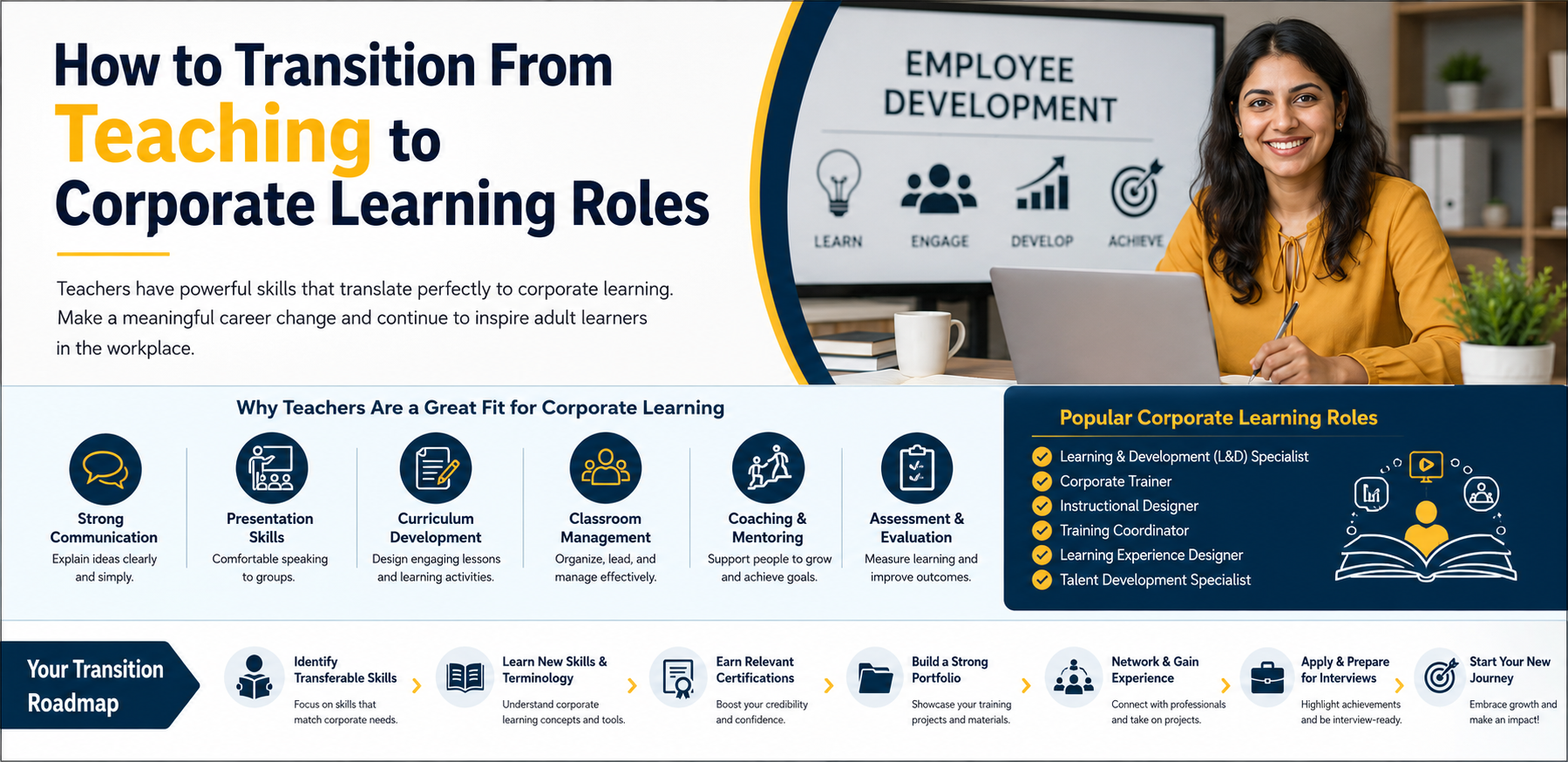
Introduction: Teaching to Corporate Learning Roles
Many teachers reach a point in their careers when they start exploring new opportunities outside the classroom. Some look for better career growth, higher salaries, flexible work environments, or the chance to work with adult learners. One of the best career paths for teachers is moving into corporate learning roles.
Corporate learning focuses on training employees, developing skills, improving performance, and helping organizations achieve their goals. The good news is that teachers already have many of the skills needed for success in corporate learning. Skills such as communication, presentation, lesson planning, coaching, and assessment are highly valuable in the corporate world.
If you are a teacher who wants to transition into corporate learning, this guide will help you understand the process and prepare for a successful career change.
How to Transition From Teaching to Corporate Learning Roles?
1. Identify Your Transferable Skills
Before applying for corporate learning roles, make a list of your transferable skills.
Examples include:
- Lesson planning
- Training delivery
- Public speaking
- Curriculum development
- Communication
- Coaching
- Leadership
- Time management
- Problem-solving
- Project management
- Assessment design
- Content creation
When creating your resume, focus on these transferable skills rather than only your teaching responsibilities.
For example:
Instead of writing:
“Managed a classroom of 30 students.”
You can write:
“Facilitated learning programs for groups of 30+ participants while maintaining engagement and achieving learning objectives.”
This sounds more relevant to corporate employers.
2. Learn Corporate Learning Terminology
Every industry has its own language. Learning common corporate learning terms will help you communicate confidently during interviews.
Important terms include:
- Learning and Development (L&D)
- Employee Training
- Instructional Design
- Learning Management System (LMS)
- eLearning
- Upskilling
- Reskilling
- Competency Development
- Performance Improvement
- Learning Analytics
- Talent Development
Understanding these terms helps employers see that you are serious about entering the field.
3. Develop New Skills
Although teaching provides a strong foundation, learning additional skills can make you more competitive.
Instructional Design
Instructional design involves creating effective learning experiences.
Popular instructional design models include:
- ADDIE
- SAM
- Bloom’s Taxonomy
- Adult Learning Theory
eLearning Development
Many organizations use online learning programs.
Learning tools such as:
- Articulate Storyline
- Rise 360
- Adobe Captivate
- Canva
- Camtasia
can increase your job opportunities.
Learning Management Systems
Many companies use LMS platforms to deliver training.
Examples include:
- Moodle
- TalentLMS
- Docebo
- Cornerstone
- SAP SuccessFactors
Basic knowledge of LMS platforms can be valuable.
Project Management
Corporate learning projects often involve deadlines, stakeholders, and budgets.
Learning project management fundamentals can strengthen your profile.
4. Earn Relevant Certifications
Certifications can help demonstrate your commitment to the field.
Some useful certifications include:
Instructional Design Certificates
Many universities and online platforms offer instructional design courses.
Learning and Development Certifications
Professional L&D certifications can improve credibility.
Project Management Certifications
Basic project management certifications can be useful for learning professionals.
eLearning Development Courses
Courses focused on eLearning tools can help you build practical skills.
You do not need every certification. Start with one that aligns with your target role.
5. Build a Corporate Learning Portfolio
A portfolio can help employers see your capabilities.
Include examples such as:
- Training presentations
- Workshop outlines
- Learning modules
- Employee training guides
- eLearning projects
- Assessment materials
If you do not have corporate projects yet, create sample projects.
For example:
- Customer service training
- Workplace communication training
- Leadership development training
- Time management workshops
These samples can demonstrate your skills effectively.
6. Update Your Resume
Your resume should be written for corporate learning roles rather than teaching positions.
Highlight Achievements
Focus on measurable results.
Example:
“Designed and delivered learning programs that improved student performance by 20%.”
Use Industry Keywords
Include terms such as:
- Training
- Facilitation
- Learning Design
- Employee Development
- Stakeholder Management
- Curriculum Development
Emphasize Business-Relevant Skills
Show how your experience supports organizational goals.
A well-optimized resume increases your chances of getting interviews.
Conclusion: Teaching to Corporate Learning Roles
Transitioning from teaching to corporate learning is a realistic and achievable career move. Teachers already possess many of the core skills required for success in Learning and Development roles. By understanding the corporate learning landscape, developing new skills, building a portfolio, expanding your network, and gaining relevant experience, you can position yourself as a strong candidate for corporate learning opportunities.
Remember that career transitions take time. Focus on continuous learning, stay patient, and highlight the value your teaching experience brings to the workplace. With the right preparation and mindset, you can successfully move from the classroom to a rewarding career in corporate learning and development.






Comments
Be the first to leave a comment.