

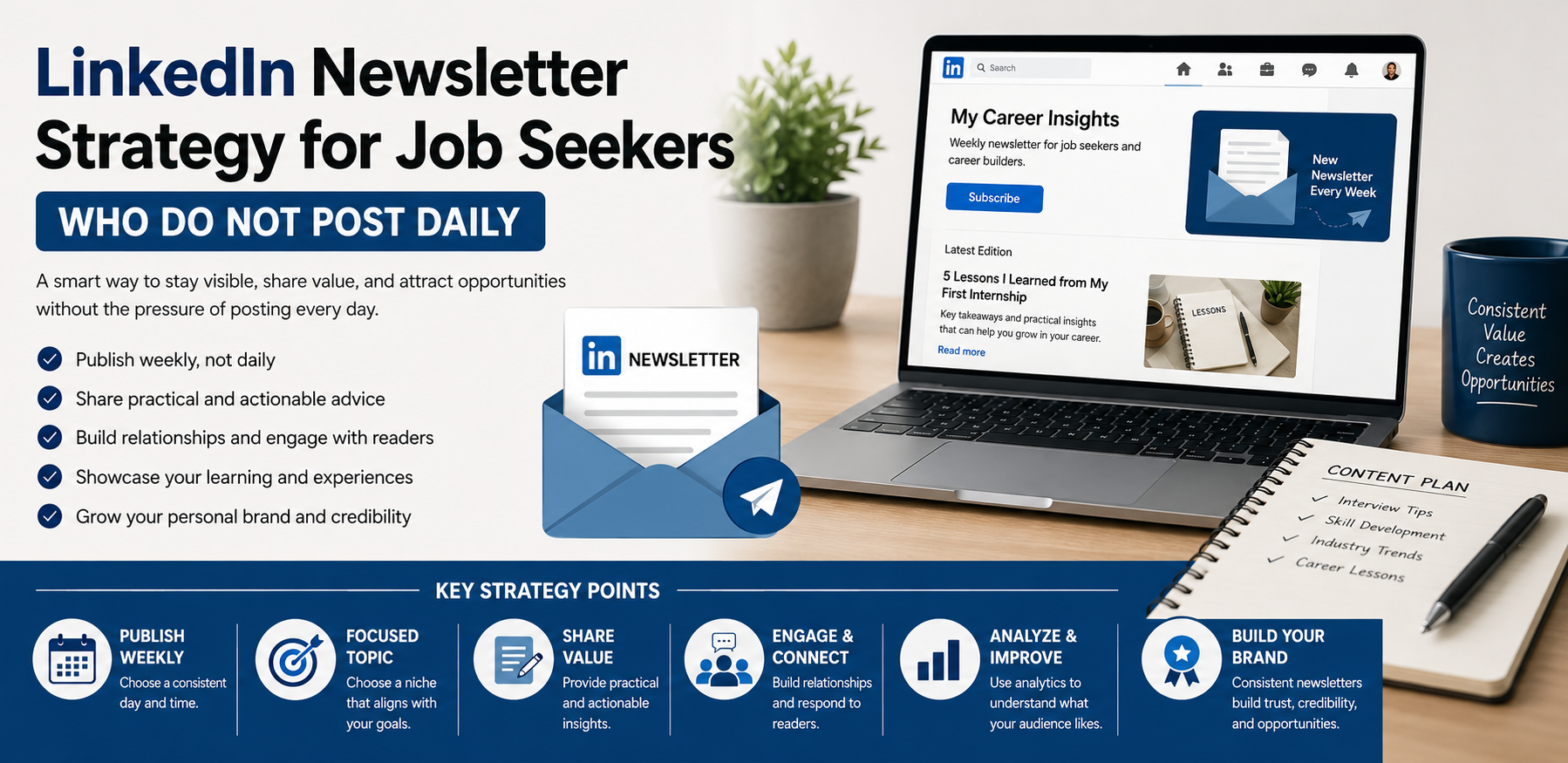
Introduction: LinkedIn Newsletter Strategy
Many job seekers believe that they must post on LinkedIn every day to attract recruiters, build their professional brand, and create networking opportunities. While daily posting can help increase visibility, it is not the only way to grow on LinkedIn. In fact, many professionals successfully build strong personal brands and attract job opportunities without posting daily.
One of the most effective tools available on LinkedIn is the LinkedIn Newsletter feature. A newsletter allows you to share valuable content on a regular schedule without the pressure of creating daily posts. It helps you establish expertise, stay visible in your industry, and build meaningful connections with recruiters and professionals.
If you are a job seeker who struggles to post every day due to work, studies, personal responsibilities, or lack of content ideas, a LinkedIn newsletter can be an excellent alternative. This article explains how to create a successful LinkedIn newsletter strategy even if you do not post daily.
LinkedIn Newsletter Strategy Who Do Not Post Daily
1. Choose a Clear Newsletter Topic
The first step is selecting a topic that aligns with your career goals.
Many job seekers make the mistake of writing about random subjects. While variety can be interesting, a focused newsletter helps readers understand what value they can expect from you.
Choose a topic related to your target industry, skills, or professional interests.
Some examples include:
- Career development tips
- Internship experiences
- Job search strategies
- Marketing insights
- Content writing lessons
- Technology trends
- Human resources updates
- Leadership development
- Productivity techniques
- Freelancing advice
For example, if you want to become a content writer, your newsletter can focus on writing tips, content marketing trends, and lessons learned from your writing journey.
A focused topic helps attract the right audience and makes it easier to build credibility.
2. Publish Weekly Instead of Daily
One of the biggest benefits of newsletters is that they do not require daily publishing.
A weekly schedule is often ideal for job seekers because it allows enough time to create quality content without feeling overwhelmed.
Consistency is more important than frequency.
Publishing one useful newsletter every week is often more effective than posting low-quality content every day.
Choose a specific day and time for publishing. For example:
- Every Monday morning
- Every Wednesday evening
- Every Friday afternoon
When readers know your schedule, they are more likely to expect and engage with your content.
3. Create Content Based on Your Learning Journey
Many job seekers think they need to be experts before starting a newsletter.
This is not true.
You can create valuable content by sharing your learning journey.
Readers often appreciate practical experiences and lessons more than expert theories.
Some content ideas include:
- Skills you are currently learning
- Books you have read
- Courses you have completed
- Interview experiences
- Internship lessons
- Career mistakes and what you learned
- Industry trends you are studying
- Productivity techniques that helped you
For example, if you recently completed a content writing course, you can write about the most important lessons you learned and how they can help other beginners.
This approach creates authentic content while building your professional brand.
4. Use a Simple Newsletter Structure
A clear structure makes your newsletter easier to read.
You do not need complicated formatting.
A simple structure can include:
Introduction
Briefly explain the topic and why it matters.
Main Content
Share insights, tips, lessons, or experiences.
Key Takeaways
Summarize the most important points.
End with a practical action step or reflection.
Using the same structure each week makes content creation faster and helps readers know what to expect.
5. Repurpose Existing Content
You do not need to create every newsletter from scratch.
Repurposing content is one of the smartest strategies for job seekers.
You can transform:
- Blog posts into newsletters
- Course notes into articles
- Personal experiences into case studies
- LinkedIn posts into expanded articles
- Book summaries into professional insights
For example, if you wrote a blog post about interview preparation, you can expand it into a detailed newsletter edition.
Repurposing saves time and helps you maintain consistency.
6. Share Practical and Actionable Advice
Readers subscribe because they want value.
Focus on practical advice that people can apply immediately.
Instead of writing:
“Networking is important.”
Write:
“Send three personalized connection requests each week to professionals in your target industry.”
Specific advice is more useful and memorable.
Actionable content also increases engagement because readers can see real results from your suggestions.
Conclusion: LinkedIn Newsletter Strategy
You do not need to post on LinkedIn every day to attract recruiters and build a strong professional presence. A well-planned LinkedIn newsletter can help you stay visible, demonstrate expertise, and grow your network without the pressure of daily content creation.
By choosing a focused topic, publishing consistently, sharing practical insights, telling authentic stories, and engaging with readers, you can create a newsletter that supports your job search and personal brand.
“You don’t need to post every day to build a strong LinkedIn presence. A well-planned newsletter can keep you visible and attract opportunities consistently with Best Job Tool.”






Comments (2)
[632]Scatter Casino Login & Register Online: Download Scatter App & Slots APK for Exclusive Game Bonuses in the Philippines.,Experience Scatter Casino login! Register online for exclusive Scatter game bonuses. Get the Scatter app download & slots APK for the best mobile gaming in the Philippines. visit: scatter
[8853]betcric লগইন ও অ্যাপ ডাউনলোড | বিকাশ অনলাইন ক্যাসিনো গেম,betcric login করুন এবং লাইভ ক্যাসিনো স্লট গেমের আনন্দ নিন। বিকাশ দিয়ে অনলাইন ক্যাসিনো ডিপোজিট করে আজই betcric app download করে খেলা শুরু করুন। visit: betcric