

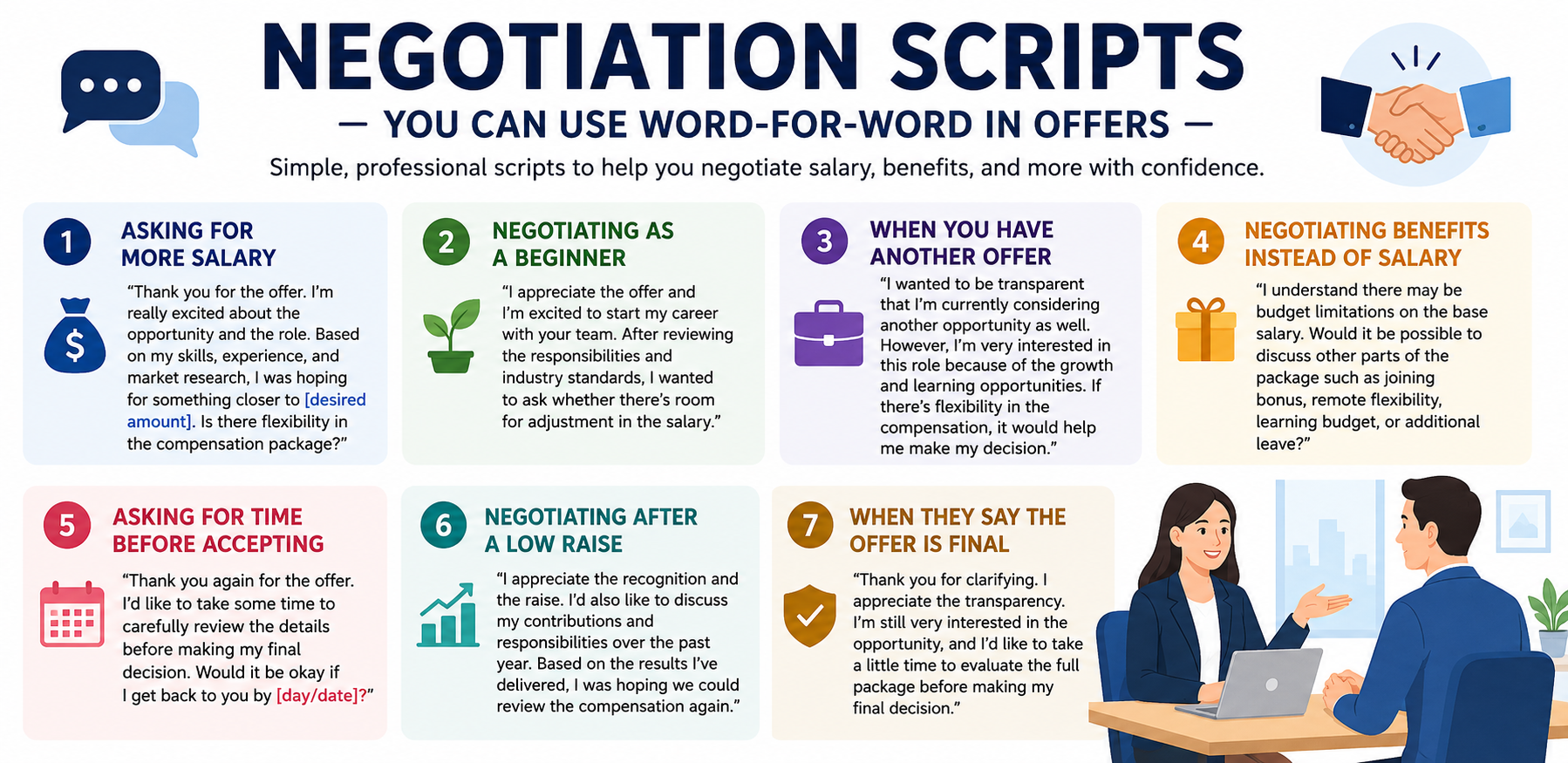
Introduction: Negotiation Scripts
Salary negotiation does not only mean asking for more money, but it means asking for the real value of your work. When you negotiate, you are sitting on a strong financial base for yourself, on which increments, bonuses, and promotions are calculated in the future. If you take 5,000 to 10,000 extra, then the small difference creates a huge gap, it is called the compound effect.
Many people think negotiation means becoming greedy, but it’s not like that, it is a professional way to get the real value of your work. And employers appreciate when you negotiate and understand what you are worth and are confident in. If you do not negotiate, that means you are not accepting growth in your career. That’s why you should not avoid negotiation.
Let’s explore negotiation scripts.
Myths About Salary Negotiation
Many people don’t want to negotiate because Myths are swirling in their minds like
- They will negotiate, and then the boss will think that he or she is a greedy person.
- The offer will get rejected.
- His or her image will get ruined in the company.
Reality is, negotiation is a standard practice in the professional world. Employers already expect that you will talk according to your worth. If you negotiate, then it is a sign for them that you know the real value of your work and you are confident about it. Negotiation doesn’t mean rudeness, it means presenting yourself according to your value, the market rate, and your achievements. People miss their opportunities and rights because of myths, and they accept a lower salary, which decreases their future growth.
Negotiation Scripts You Can Use Word-for-Word in Offers
1. Asking for More Salary
Tone and freezing methods are used a lot during salary negotiations. It becomes easy for the employer to consider you if you request positively and in a professional manner. For example, instead of saying “I feel the salary is very low,” you should say “Based on my skills and market data, I believe a salary of ₹X would reflect my value better”.
You look collaborative with positive phrasing not demanding. Your every point should be in a solution-oriented tone to keep the conversation constructive. This keeps a friendly mood during the negotiation.
2. “We don’t have budget” – how to respond
If the employer says that they do not have a budget, then this doesn’t mean that negotiation is not possible. You can calmly respond to discuss alternative options. First acknowledge their limitations, then repeat your value point, like your achievement, market salary data, and the impact of your work.
For example, say “I understand the budget constraints, but considering the value I bring, can we explore other forms of compensation or plan for a salary review in the next 6 months?” If you speak this way, then you will look flexible, and the doors of the future Hike will be open. You have to keep in mind that negotiation doesn’t always mean to increase your salary; sometimes it is also referred to as securing better terms.
3. “This is the best we can offer” – negotiating non-monetary benefits
When the employer says, “This is the best we can offer,” that means the chances of increasing salary are low, but this doesn’t mean the conversation has ended. In this situation, you can negotiate non-monetary benefits. For example, you can request flexible work, extra vacation days, paid training programs, professional development courses, help benefits, or even a signing bonus.
You can say, “If the salary can’t be adjusted, would it be possible to consider additional benefits such as remote work days or support for skill development?” By this, you can show the employer that you appreciate value, but you are also proactive in your growth.
4. Asking for perks, bonuses, flexible hours, or extra vacation
In salary negotiation, only fixed pay is not important; the overall compensation package is also equally important. If the base salary does not match your expectations, then you can negotiate for perks and benefits like performance-based ones, such as a yearly incentive, extra paid leave, work-from-home days, flexible working hours, travel allowance, health insurance, or training reimbursement.
These benefits improve your work-life balance and add long-term monetary value. For example,” if we can’t increase the base salary, I would like to discuss the possibility of a performance bonus and an extra week of paid vacation”. Like this, you can maximize your total package even if your base salary remains the same.
5. When You Have Another Offer
If you already have another offer, avoid sounding competitive or arrogant.
“I wanted to be transparent that I’m currently considering another opportunity as well. However, I’m very interested in this role because of the growth and learning opportunities. If there’s flexibility in the compensation, it would help me make my decision.”
This script:
- Keeps the tone honest
- Avoids pressure tactics
- Shows genuine interest in the company
Conclusion: Negotiation Scripts
Negotiating an offer does not have to feel intimidating. A respectful and confident conversation can help you communicate your value without damaging the relationship with the employer. The goal is not to “win” the negotiation, but to reach an agreement that feels fair and sustainable for both sides.
The more you practice professional communication, the easier these conversations become. Even if the company cannot change the offer, negotiating calmly still leaves a positive impression because it shows confidence, maturity, and self-awareness.






Comments
Be the first to leave a comment.