

Introduction
In today’s competitive job market, your resume is more than just a document that lists your education and experience. It is your personal marketing tool. Recruiters receive hundreds of resumes for a single job opening, and they often spend only a few seconds scanning each one. In such a short time, the words you use can make a big difference. Powerful and action-oriented words help your resume stand out, show confidence, and clearly communicate your value.
Many candidates have good skills and experience, but they fail to get shortlisted because their resume sounds weak, generic, or passive. Words like “responsible for” or “worked on” do not create a strong impact. On the other hand, powerful resume words show initiative, leadership, results, and professionalism. They help recruiters quickly understand what you did and how well you did it.
This article explains why word choice matters in a resume, how powerful words influence selection decisions, and which types of words you should use to improve your chances of getting interview calls. Instead of only bullet points, this article focuses more on detailed explanations so you can truly understand how to apply these words correctly.
Why Powerful Words Matters in a Resume?
A resume is not read like a book. It is scanned. Recruiters look for keywords, achievements, and clear signals that you are suitable for the role. The words you choose decide whether your resume sounds confident or uncertain, impactful or average.
When you use strong action words, your resume sounds active and result-driven. It shows that you are someone who takes ownership of work rather than someone who only follows instructions. Powerful words also help your resume pass Applicant Tracking Systems (ATS), which many companies use to filter resumes. These systems are programmed to look for specific keywords related to skills, actions, and achievements.
Another important reason word choice matters is perception. Even if two candidates have done similar work, the one who describes it using confident and impactful words appears more capable. Recruiters often associate strong language with strong performance, even before meeting the candidate.
The Psychological Impact of Powerful Words in Resume
Words influence how people think and feel. In resumes, powerful words create a positive psychological impression on recruiters. When a recruiter reads words like “achieved,” “improved,” or “led,” they automatically imagine a proactive and capable professional.
Strong words also reduce doubt. Weak words make recruiters question your confidence and contribution. For example, saying “helped the team” sounds less impressive than saying “supported the team to achieve project goals within deadlines.” The second version feels more concrete and reliable.
Using powerful words also shows that you understand professional communication. It tells recruiters that you know how to present yourself clearly and effectively, which is an important skill in almost every job role.
Action Verbs That Make Your Resume Stronger
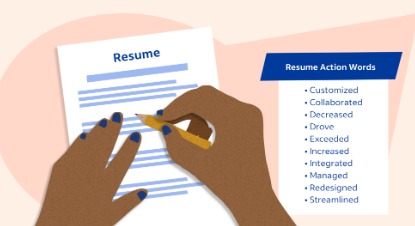
Action verbs are the foundation of a powerful resume. They show what you actually did instead of what you were supposed to do. Instead of starting sentences with passive phrases, action verbs immediately communicate impact.
Words like “managed,” “developed,” “implemented,” and “executed” show that you took responsibility. These words make your experience sound more meaningful and structured. For freshers, action verbs are especially important because they help present internships, projects, and college activities in a professional way.
For example, instead of writing, “Was responsible for social media posts,” you can write, “Created and managed social media content to improve engagement.” This small change completely changes how your experience is perceived.
Leadership and Ownership Words That Impress Recruiters
Recruiters value candidates who can take ownership and show leadership, even if the role is not a managerial one. Leadership words do not always mean leading a team. They also reflect decision-making, accountability, and initiative.
Words such as “led,” “coordinated,” “guided,” and “oversaw” show leadership qualities. Even if you were a fresher or intern, you may have led a small task, coordinated with peers, or handled responsibility independently. Using such words highlights your potential.
Ownership-based words like “initiated,” “handled,” and “took charge of” tell recruiters that you do not wait to be told what to do. These words are especially useful for startups and fast-paced work environments where self-driven candidates are preferred.
Achievement-Focused Words That Show Results
One of the biggest mistakes candidates make is listing duties instead of achievements. Recruiters are more interested in results than responsibilities. Achievement-focused words help you highlight what you accomplished, not just what you did daily.
Words like “achieved,” “increased,” “reduced,” “improved,” and “delivered” shift the focus to outcomes. These words become even more powerful when combined with numbers, percentages, or clear results.
For example, instead of saying, “Worked on content writing,” you can say, “Delivered SEO-optimized content that increased blog traffic.” This shows value and impact, not just effort.
Problem-Solving Words That Show Critical Thinking
Every organization looks for employees who can solve problems. When your resume includes problem-solving words, it shows that you can think logically and handle challenges.
Words such as “analyzed,” “resolved,” “identified,” and “optimized” suggest that you do more than routine work. They show that you observe problems, think about solutions, and take corrective action.
For example, writing “Identified content gaps and optimized articles for better engagement” sounds much more professional than simply saying “Edited articles.” It shows thought process and responsibility.
Communication and Collaboration Words That Build Trust
Most jobs require teamwork and communication. Recruiters want candidates who can work well with others and communicate clearly. Using the right words helps you present yourself as a team player.
Words like “collaborated,” “communicated,” “presented,” and “coordinated” highlight your interpersonal skills. These words are especially important for roles in marketing, HR, content writing, sales, and customer support.
Strong communication words also show confidence. For instance, “Presented project findings to stakeholders” sounds more impactful than “Shared project details.”
Creativity and Innovation Words for Modern Job Roles
Creativity is no longer limited to design or content roles. Even technical and business roles require innovative thinking. Using creativity-related words helps you show adaptability and originality.
Words such as “designed,” “conceptualized,” “created,” and “innovated” highlight your creative contribution. These words are useful for resumes in content writing, digital marketing, product development, and media roles.
However, creativity words should always be supported by context. Simply writing “creative thinker” is less effective than showing how you applied creativity in a real task or project.
Technical and Skill-Specific Powerful Words
Every industry has its own set of powerful keywords. Using industry-specific words helps your resume get noticed by both ATS and recruiters. These words show that you understand the field and have relevant knowledge.
For example, in content writing, words like “SEO optimization,” “keyword research,” and “content strategy” are powerful. In digital marketing, words such as “campaign management,” “analytics,” and “conversion optimization” add value.
Using correct technical terms increases your credibility. However, it is important to use only those skills you genuinely have, because recruiters may test them during interviews.
Words That Show Growth and Learning Ability
Companies prefer candidates who are willing to learn and grow. Growth-oriented words show that you are adaptable and open to improvement.
Words like “learned,” “upskilled,” “adapted,” and “enhanced” reflect a positive attitude toward development. These words are particularly useful for freshers and career switchers.
For example, saying “Adapted quickly to new tools and workflows” shows flexibility and eagerness, which are highly valued qualities.
Common Weak Words You Should Avoid
Just as powerful words strengthen your resume, weak words can reduce its impact. Words like “responsible for,” “helped,” and “worked on” sound passive and unclear. They do not show ownership or results.
Using too many filler words also makes your resume boring. Recruiters may lose interest if they cannot quickly understand your contribution. Replacing weak phrases with strong action-oriented words immediately improves clarity and professionalism.
For more resume tips, read here.
How to Use Powerful Words Correctly?
Using powerful words does not mean over-exaggerating or lying. The key is honesty with confidence. Your words should match your actual experience and skills.
Always place powerful words at the beginning of sentences to create impact. Combine them with clear context and results whenever possible. Avoid using the same word repeatedly, as it makes your resume look repetitive.
Powerful words work best when your resume is well-structured, clear, and easy to read. Balance strong language with simplicity so that your resume sounds confident but not arrogant.
Conclusion
Your resume is often your first and sometimes only chance to impress a recruiter. Powerful words help you communicate your value quickly and effectively. They transform your resume from a simple list of tasks into a compelling story of skills, achievements, and potential.
By choosing the right words, you can highlight your strengths, show confidence, and increase your chances of getting shortlisted. Whether you are a fresher or an experienced professional, improving your word choice is one of the easiest and most effective ways to upgrade your resume.
Remember, skills matter, experience matters, but the way you present them matters just as much. Use powerful words wisely, stay honest, and let your resume speak strongly for you.
Explore more blogs here.






Comments
Be the first to leave a comment.