

Introduction: Job Interview Dress Code and Etiquette
In order to impress employers when attending a job interview in the Netherlands, it’s important to not only bring an impressive CV but to also ensure you are dressed, communicate well, arrive on time and display good manners. Knowing the Job Interview Dress Code and etiquette will help you feel more confident and show that you are a professional person.
The Netherlands is known for being a professional but laid back country. Employers will enjoy seeing you being honest, authentic, direct and practical. It’s important to be aware of the culture in the workplace in the Netherlands and what to expect from your interview.
What Is the Job Interview Dress Code and Etiquette in the Netherlands?
1. Know the Dress Code
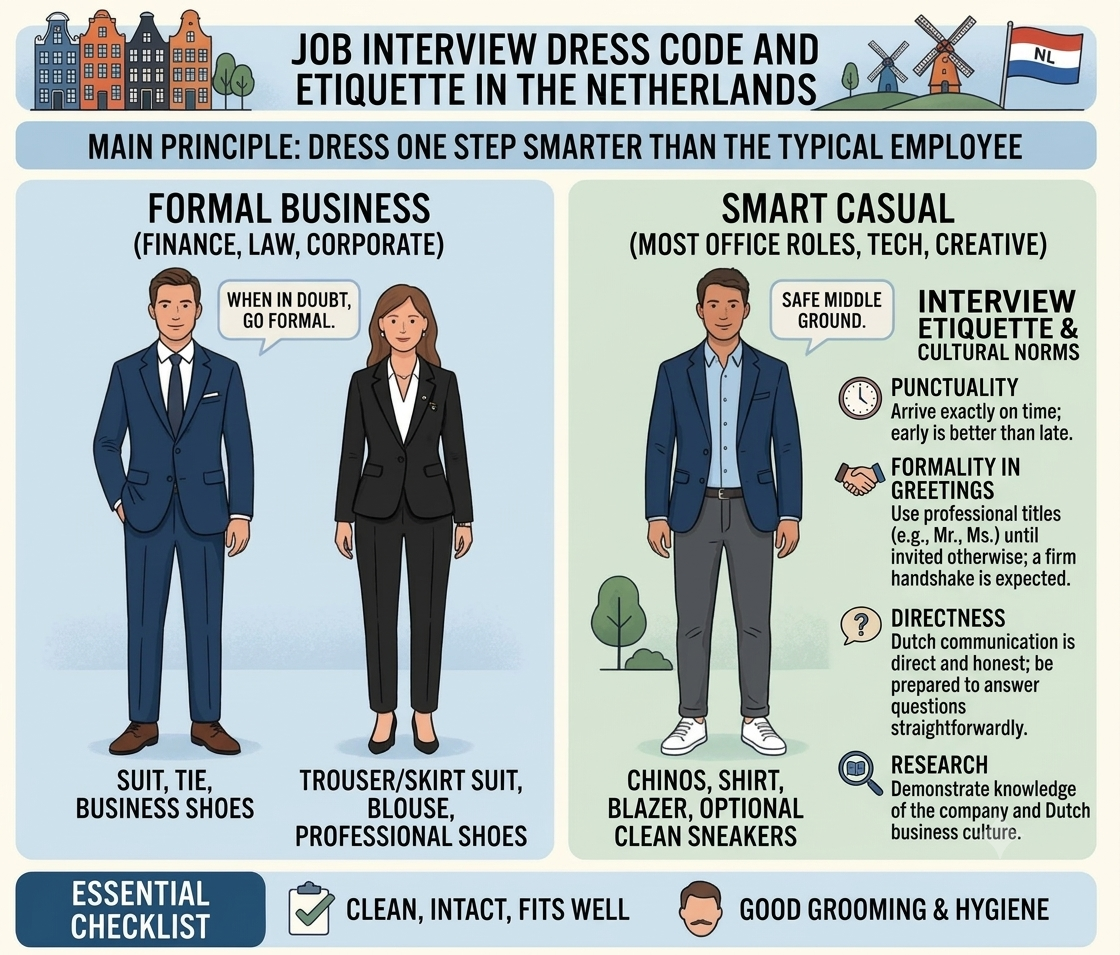
The Dress Code varies depending on the industry, company and role you’re applying for. Unlike some countries, a lot of Dutch companies prefer you to be smart, comfortable and professional. This means if you’re applying for a corporate role such as banking, finance, legal or consultancy, it’s usually best to wear a smart suit.
Men should wear a smart fitting suit with a clean top and polished shoes. Women should wear smart suits, smart trousers or modest business dresses. If applying for roles in creative industries, technology companies or start up businesses, it may be better to wear business casual. Knowing what the company expects will help you feel confident when entering the interview.
2. Be smart and comfortable
Ensure you are wearing clean, smart and comfortable clothing. Neutral colours such as navy blue, black, grey and white are usually a good choice. Ensure your clothing is ironed and your shoes are clean. Avoid wearing colours that are too bright, busy patterns and large accessories. Ensure you are looking smart by having your hair and nails clean and tidy. Wearing smart and organised clothing will show that you are confident.
It is also important to consider how you are dressed and if it fits with the working culture of the company. Prior to the interview try to get an understanding of what type of dress code the company uses. Do not wear anything that is too tight and will make you uncomfortable as this can impact how confident you feel. If you are well balanced and have good personal hygiene this will help you feel relaxed during the interview.
3. Know the company
It’s important to know the company you’re interviewing with. Dutch employers will like to see that you have a real interest in the company and understand what they offer. Before your interview, visit the company website and read what they have recently posted. Ensure you know what their mission is and what they do as a business.
Read the job description carefully so that you can align your skills and past experience to what the employers are looking for. Knowing what the company offers will help you know what the working environment would be like and what to wear. For example, if it’s a traditional financial company they may expect you to wear formal business clothing. If it’s a technology start up, they may be a more laid back Dress Code.
4. Be on time
Being on time is very important in the Netherlands. If you’re running late without a good reason you will create a bad impression. Aim to get to the interview location 10-15 minutes early. If it’s an online interview ensure you have checked your internet connection, microphone, camera and the link.
Plan your route to ensure you don’t run into any issues with traffic or public transport. If you are running late due to something unavoidable let the recruiter know as soon as possible and politely apologise. Being on time is an important part of being a professional person during your interview.
5. Be direct with your communication
The Dutch are known for being direct, honest and straightforward. The interviewer may ask you direct questions so you should aim to answer them in a direct way. Avoid giving long winded answers and don’t over exaggerate your professional achievements. Be confident when explaining your skills, experience and career goals.
Greet your interviewer politely, make appropriate eye contact, listen carefully and wait until they have finished speaking. If it’s a face to face interview, a firm but natural handshake may be appropriate. However, follow the lead of the interviewer. Being a good communicator shows that you can work well with your colleagues.
6. Be confident with your body language
Your body language can really affect how confident and professional the interviewers see you. Sit comfortably during the interview, keeping your back straight. Make natural eye contact. Smile naturally and show interest when they are talking about the company, role and working environment.
Avoid crossing your arms, constantly checking your phone and any distractions. Ensure your facial expressions and gestures show that you are confident, attentive and positive. Along with knowing the correct Dress Code, ensuring you have good body language will help create a balanced and impressive image.
7. Prepare answers to common questions
Preparing will help you feel less nervous and communicate well during your interview. In the Netherlands employers may ask you questions about your professional background, strengths, weaknesses, career goals and how you deal with challenges in the working environment.
Common questions include why you want to work for the company, why you are right for the role and where you see yourself in 5 years. Prepare some examples from your previous work experience. Using the STAR method (Situation, Task, Action, Result) will help you explain your professional achievements. Ensure your answers are clear, honest and relevant.
8. Be aware of cultural differences
Dutch employers usually enjoy equality, teamwork, independence, transparency and work/life balance. Show that you can work independently but also be a valuable member of a team. The working culture in the Netherlands usually encourages people to give their opinions, ask questions and communicate well with management and colleagues.
Avoid over exaggerating your achievements and making unrealistic promises. Be honest about your abilities and show that you are keen to learn new skills. Understanding the cultural expectations is very important. Employers will look at your professional appearance but also your personal qualities.
Conclusion: Job Interview Dress Code and Etiquette
To successfully prepare for your job interview in the Netherlands it’s important to know what is expected from you professionally, understand the culture in the workplace and communicate well. Knowing the correct Dress Code, being on time, having positive body language and confidently answering questions will create a great first impression.
Dutch employers often enjoy seeing someone who is authentic, honest, independent and practical. You don’t always need to wear an expensive formal outfit to look professional. Focus on wearing appropriate clothing for the company, communicate clearly and be enthusiastic about the role. Following these tips will help you feel more confident for your next interview in the Netherlands.
Make your first impression count with the right preparation, professional appearance, and confident communication. Follow these Job Interview Dress Code and Etiquette tips and use the Best Job Tool to explore career opportunities, improve your job search, and prepare for upcoming interviews. Start preparing today, find the right opportunities, and take the next step towards building a successful career in the Netherlands!





Comments
Be the first to leave a comment.