

Introduction
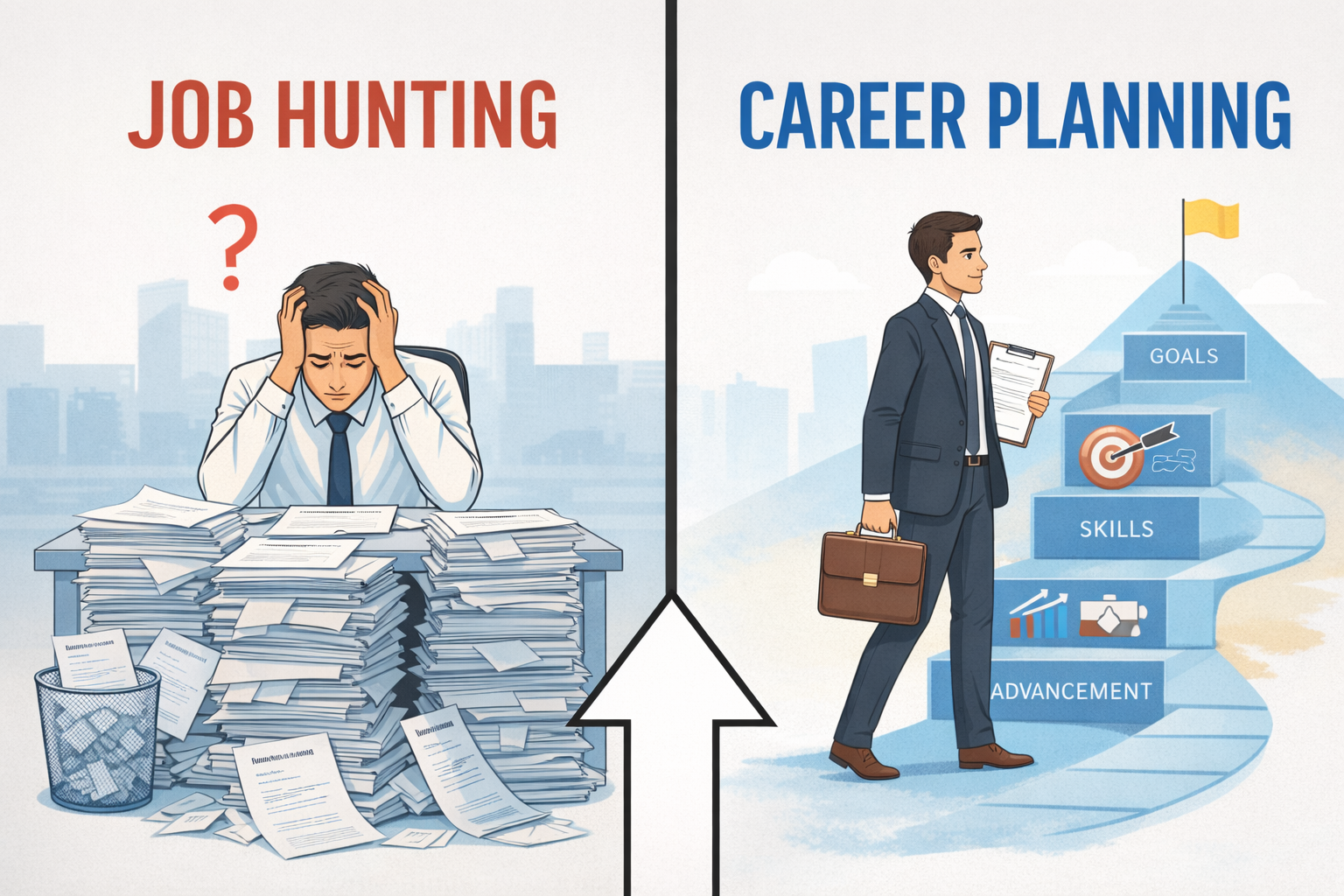
In today’s competitive world, job hunt is not enough. Many candidates apply every day on new job portals, give interviews, and then feel confused in their career. The reason is we search job but we do not plan our career. Job hunting is a short-term solution but career planning creates roadmap of long-term success. If you want to make your future stable, meaningful, and growth-oriented, then do not just chase job. Instead, plan your career smartly.
What Is Career Planning?
Career planning is a long-term process in which we take decisions regarding our career goals, skills, interests, and future growth. It means thinking where we’ll be in next 5 to 10 years. Career planning gives us clear direction through which we develop right skills, choose right opportunities, and achieve growth according to our strengths. When career is planned, then we grow with confidence.
Why Career Planning Beats Job Hunting?
1. Career Planning Gives Clear Direction
When you plan your career early, you first get time to understand your interests and strengths. In the initial years of school or college, students can identify what they like and the areas in which they are naturally good.
If you know your skills and passions, making career decisions becomes much easier. This awareness helps you avoid the wrong career path and keeps you focused on your goals. Through early planning, you also understand the areas where you need improvement and the strengths you need to further develop.
2. Skill Development Becomes Focused
When you know your interests and strengths in advance, you can choose the right courses and skills. For example, if you have an interest in technology and programming, you will focus on computer science or coding-related courses, not unrelated fields.
Through early planning, you can also schedule certifications, workshops, and extra skill development systematically, which makes you job-ready. Choosing the wrong courses or skills can waste your time and increase unnecessary stress and confusion. Early selection keeps you focused and better prepared.
3. Better Decision-Making in Job Selection
When career planning starts early, your decision-making skills naturally improve. You learn to evaluate every choice and opportunity logically, such as which course, internship, or skill will best serve your long-term goals. Early planning ensures decisions are informed and strategic, not emotional or impulsive. This habit helps you in every aspect of life, enabling you to make confident and independent career choices.
4. Long-Term Growth and Stability
Another major benefit of early career planning is that you get better opportunities and remain competitive. When you start early, you can complete internships, workshops, certifications, and projects on time. This experience and exposure give you an extra advantage in your resume and portfolio. Competition is tough in the market, but those who start early are more prepared and become attractive candidates for recruiters. By starting early, you can also clearly understand industry trends and demands.
5. Career Planning Builds Confidence
When you plan your career early, you have a clear direction and goals. This clarity naturally boosts your confidence and motivation. When you know what you want to achieve and how to achieve it, you become more focused in your daily actions and decisions.
Through early planning, students try new experiences by stepping out of their comfort zones, such as internships, projects, or competitions, which strengthens their self-belief and determination. Confidence increases when you develop your skills systematically and can clearly see your progress.
6. Job Hunting Without Planning Leads to Frustration
The transition from college to professional life or internships is often stressful, but early career planning can make this transition smooth and less stressful. When you explore your goals, skills, and opportunities early, you avoid confusion and anxiety at the last minute. Through planning, you feel ready and confident, whether it is placement season or your first job joining. Early preparation also makes handling deadlines, interviews, and industry expectations much easier.
7. Role of Self-Assessment in Career Planning
When you plan your career early, you gain a better understanding of industry requirements and skill demands. This allows you to identify which skills need development and which are already your strengths. By starting early, you get time to improve both your technical skills and soft skills, such as communication, teamwork, problem-solving, and knowledge of specific tools or software.
If planning is delayed, the pressure to learn and develop skills increases at the last moment, leaving you feeling unprepared. Early planning lets you build your skills gradually and confidently, giving you an edge in the job market.
8. Career Planning Saves Time, Money & Effort
Starting career planning early also saves your time, money, and effort. If you start late, you may face multiple trial-and-error situations, such as changing courses, taking extra coaching, or searching for last-minute internships. Through proper planning, you can manage these challenges, avoid unnecessary expenses, and use your resources efficiently. Following a structured approach gives you long-term benefits and helps you move confidently toward your goals.
Know “Why career planning should start early”.
Conclusion
Job hunting may help you earn money quickly, but career planning helps you build a meaningful and stable future. When you focus only on finding the next job, you often feel confused, stressed, and stuck in the same cycle. Career planning, on the other hand, gives direction, purpose, and clarity.
It helps you develop the right skills, make better choices, and grow with confidence over time. Instead of running after every opportunity, planning your career allows you to choose opportunities that truly align with your goals. In the long run, a planned career always brings more satisfaction, stability, and success than random job hunting.
You can read more such blogs here.






Comments
Be the first to leave a comment.