

Introduction
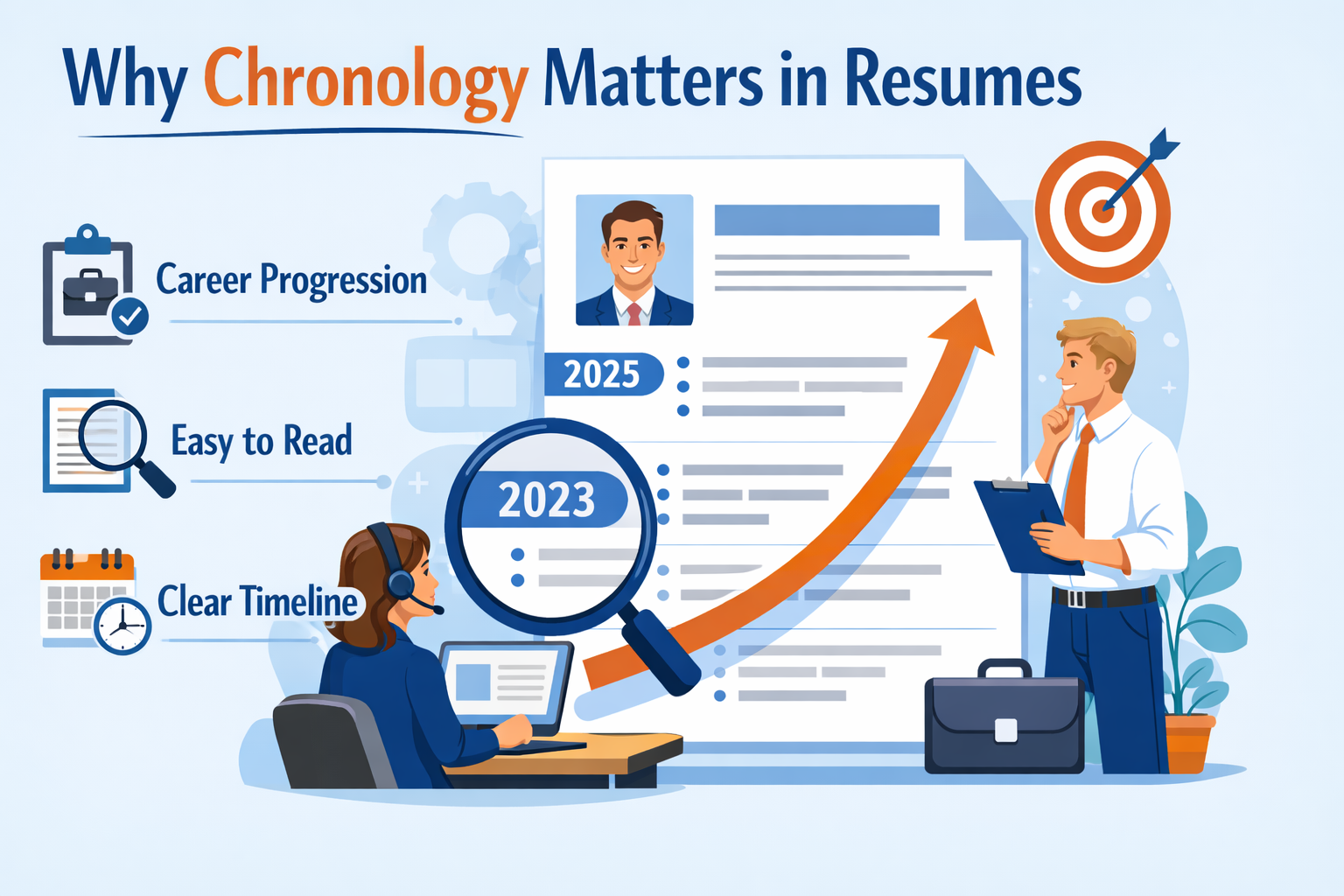
A resume is more than just a list of your skills, education, and work experience. It is your professional story condensed into a single document, designed to make a recruiter understand your journey at a glance. While many aspects of a resume are important, the chronological order of the information you present plays a crucial role. Chronology in a resume refers to organizing your professional experiences and achievements according to the timeline of events—usually from the most recent to the oldest. This simple yet powerful technique can significantly affect the way your resume is perceived.
In this article, we will explore why chronology matters in resumes, how it helps recruiters, and how you can use it effectively to create a strong professional impression.
Why Chronology Matters in Resumes?
1. First Impressions Are Key
Recruiters spend very little time on each resume. Studies suggest that the average recruiter spends only 6 to 7 seconds on the first glance of a resume before deciding whether to continue reading. In such a short period, clarity and structure become critical.
When your resume follows a chronological order, it allows recruiters to quickly see your most recent and relevant experience first. This is particularly important because your latest job or project often reflects your current skills and capabilities.
For example, consider two candidates:
- Candidate A lists experiences randomly. The recruiter sees a 2020 internship before noticing the candidate’s 2025 job as a team lead.
- Candidate B lists experiences in reverse chronological order, showing the 2025 team lead role first.
Which candidate do you think makes a stronger first impression? Clearly, Candidate B demonstrates career growth and current expertise immediately, which captures attention.
2. Chronology Highlights Career Progression
One of the primary reasons chronology matters in resumes is that it shows career progression. Recruiters want to know not just what you have done but how you have grown professionally over time.
Chronologically organized resumes provide a clear picture of your career path. They answer questions such as:
- Have you taken on more responsibility over time?
- Do your roles show increasing levels of complexity?
- Are there gaps that need explanation?
When a recruiter can see a clear path of growth, it builds trust in your professional journey. It also positions you as a candidate who is committed to learning and development, rather than someone with random or unrelated experiences.
3. Chronology Makes Your Resume Easy to Scan
Recruiters often skim resumes quickly, looking for keywords and relevant experiences. A chronological resume makes scanning easier because experiences are organized logically.
For example, if a recruiter is looking for candidates with project management experience, a chronological resume allows them to quickly locate your most recent project management roles without hunting through unrelated experiences.
Moreover, clear headings like:
- Work Experience
- Education
- Certifications
combined with chronological order, give the resume a clean structure. A recruiter can easily navigate from your most recent work to your earliest achievements, which improves readability and saves time.
4. Chronology Demonstrates Reliability and Consistency
Chronology also signals reliability and consistency. A well-ordered resume suggests that you are organized, detail-oriented, and methodical in presenting information. These qualities are highly valued in any professional setting.
If your resume jumps back and forth in time, it can confuse recruiters and make it harder to understand your career story. This might inadvertently raise questions about your professionalism or attention to detail. A chronological structure reassures recruiters that you can present information clearly and logically—an important soft skill in itself.
5. Chronology Helps Address Employment Gaps
Employment gaps are a reality for many professionals. Whether due to further studies, personal reasons, or career transitions, gaps can be concerning to recruiters. Chronology allows you to strategically present your timeline to minimize concerns.
For instance, instead of hiding gaps, you can use chronological order to show:
- Relevant volunteer work or freelance projects during the gap.
- Professional development courses or certifications completed.
This approach shows that even if there was a break, you remained productive and committed to your career growth.
6. Makes Achievements More Impactful
When you present your work experience chronologically, it allows your achievements to build on one another. Recruiters can see how your responsibilities have expanded over time and how your contributions have grown in scale and impact.
For example:
- 2021: Completed a small team project improving internal workflow.
- 2023: Led a department-wide project that increased productivity by 30%.
By organizing achievements chronologically, you create a narrative of progression and impact, making your resume more persuasive.
7. Benefits for Freshers and Entry-Level Candidates
Even if you are a fresher, chronology matters. Your academic projects, internships, part-time work, or certifications can be organized in reverse chronological order to emphasize recent and relevant experiences.
For instance:
- Internship at a digital marketing firm (2025)
- College project on social media analytics (2024)
- Certification in content writing (2023)
This approach allows recruiters to quickly see your latest accomplishments, which are often the most relevant for your first professional role.
8. Benefits for Experienced Professionals
For professionals with multiple years of experience, a chronological resume is even more critical. It helps recruiters see:
- Your most recent roles, which are often most relevant.
- Patterns of growth, showing promotions, leadership roles, or diversified experience.
- How your skills have evolved over time.
Experienced professionals often have complex career paths. Chronology provides clarity and structure, ensuring that a recruiter can understand your career story without confusion.
9. Reverse Chronology: The Modern Standard
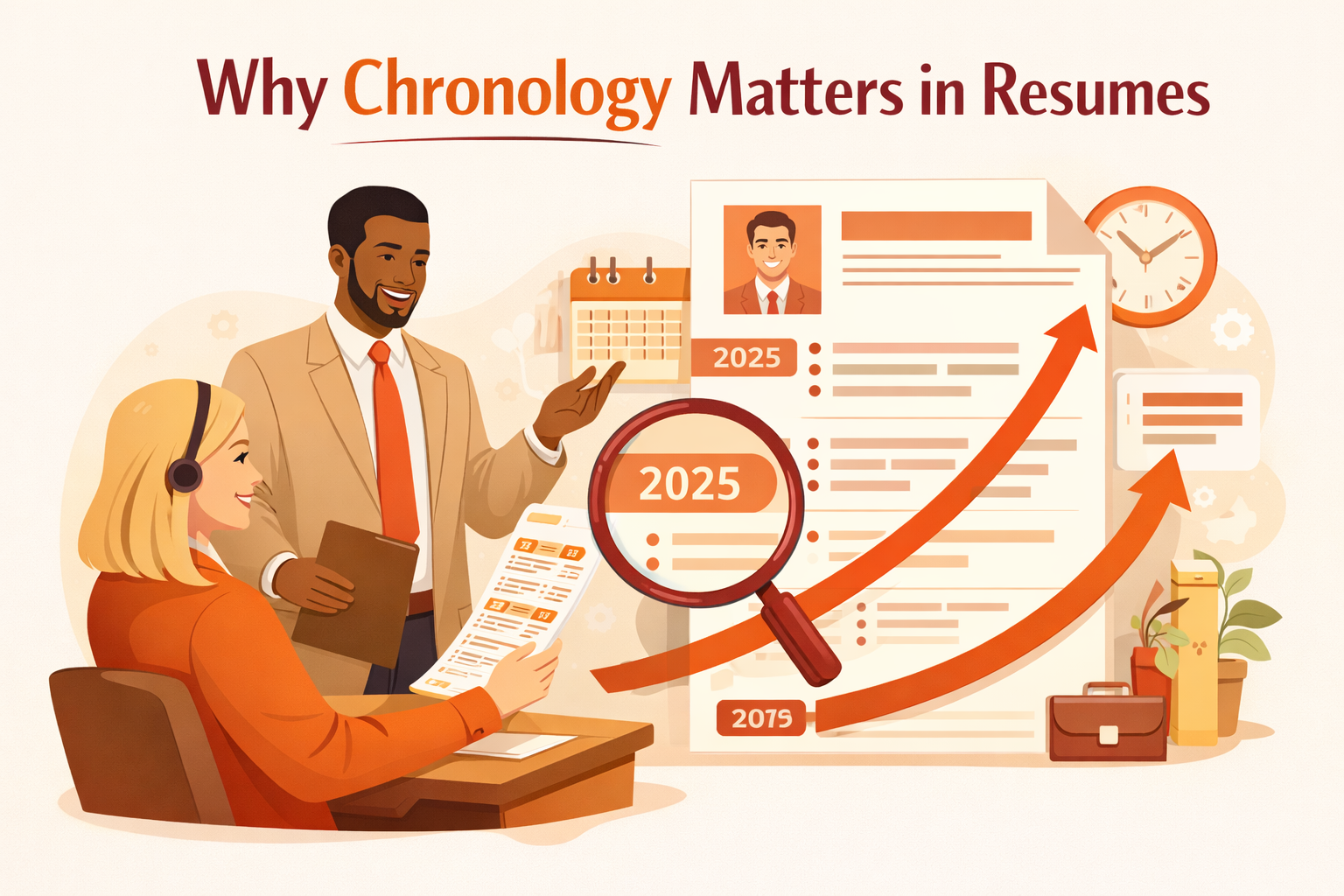
While chronological resumes are traditional, reverse chronological order is the preferred modern standard. This means starting with the most recent experiences first.
Why reverse chronology works better:
- Shows your current skills and expertise upfront.
- Immediately highlights leadership roles or advanced positions.
- Reduces the chances that important experiences are overlooked.
Reverse chronological resumes are particularly effective in competitive job markets where recruiters spend only seconds per resume.
How to Implement Chronology in Your Resume?
To make the most of chronology in your resume, follow these tips:
- Start with the most recent experiences: Whether it’s a job, internship, or project, place your latest experience at the top.
- Use clear dates: Always mention start and end dates for each role. This helps recruiters understand your timeline.
- Group similar experiences: Keep work experience, education, certifications, and projects in separate sections.
- Be consistent: Use the same date format, font, and layout throughout the resume.
- Include relevant details: Highlight your responsibilities, achievements, and skills in each role.
By following these guidelines, you ensure that your resume is chronological, professional, and easy to read.
Common Mistakes to Avoid
Even when using chronology, there are mistakes to avoid:
- Mixing timelines: Jumping between older and newer roles can confuse recruiters.
- Omitting dates: Without dates, chronology loses its value.
- Overloading with irrelevant details: Include only experiences that add value to the position you are applying for.
- Ignoring gaps: Strategically explain gaps instead of hiding them.
Avoiding these mistakes ensures your chronological resume strengthens rather than weakens your professional story.
You can also read “Why Structured Answers Perform Better”.
Conclusion
Chronology is more than just an organizational tool; it is a storytelling technique. A well-structured chronological resume helps recruiters:
- Quickly understand your career journey.
- See your professional growth and progression.
- Identify relevant skills and experiences efficiently.
- Build trust in your reliability and consistency.
Whether you are a fresher or an experienced professional, presenting your experiences in chronological order ensures clarity, enhances readability, and increases your chances of getting noticed. By understanding the importance of chronology, you can craft a resume that truly reflects your career story and leaves a lasting impression on recruiters.
Remember, your resume is your professional story. Chronology ensures it is told in the right order, making it easy for anyone to read, understand, and appreciate.
Read more such blogs here.






Comments
Be the first to leave a comment.