

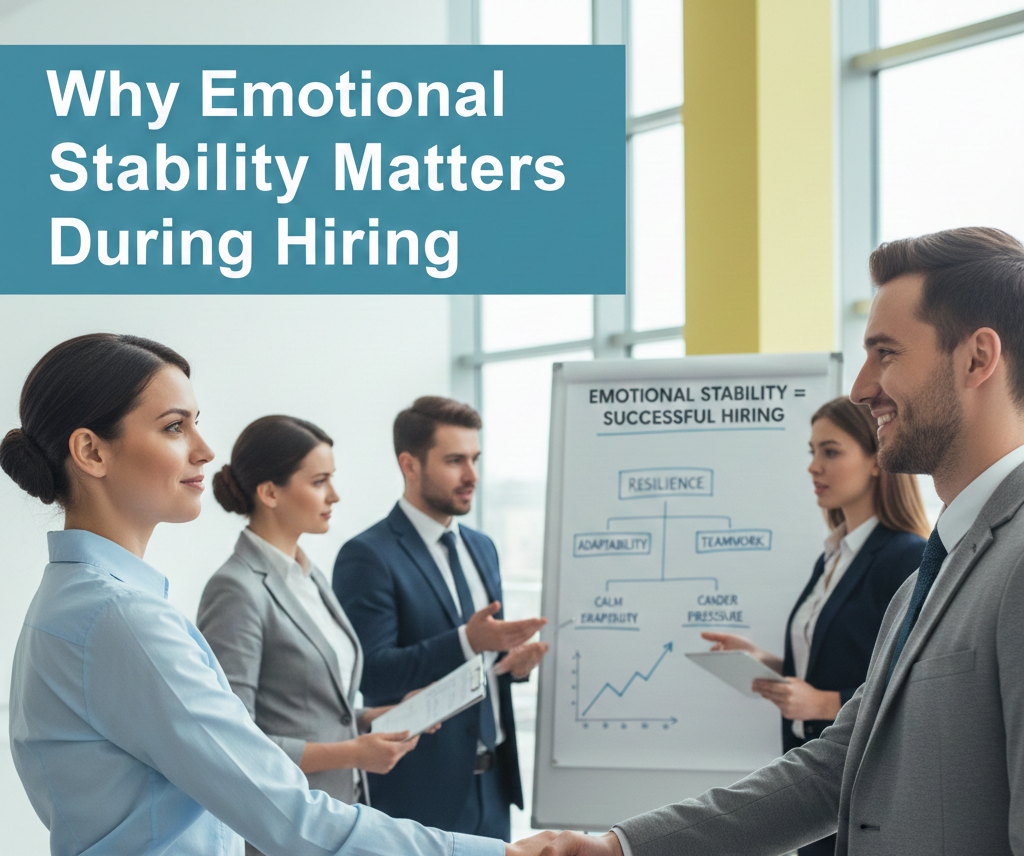
Introduction
Hiring decisions shape company culture, performance, and retention. Yet, many hiring mistakes begin with emotions, not data. That is why emotional stability during hiring has become a critical skill for recruiters and leaders today.
When emotions run unchecked, bias enters silently. As a result, good candidates get overlooked. Poor hires then slip through. Therefore, understanding emotional stability during hiring helps organizations make smarter, fairer, and more consistent decisions.
In a fast-paced job market, pressure is constant. Deadlines, targets, and expectations can cloud judgment. However, emotionally stable hiring processes protect both employers and candidates from costly mistakes.
Understanding emotional stability in hiring decisions
Emotional stability refers to the ability to stay calm, objective, and consistent. During hiring, this trait ensures decisions are based on skills and fit, not mood.
Interviewers often carry stress into conversations. Unfortunately, that stress affects tone, questions, and evaluation. Emotional stability during hiring helps recruiters separate personal feelings from professional judgment.
Moreover, stable emotions allow better listening. Recruiters hear what candidates actually say. Consequently, interviews become more meaningful and fair.
How emotions silently influence candidate evaluation
Every interviewer brings unconscious emotions into the room. These emotions often influence first impressions within seconds.
For example, a bad morning can lower patience. Likewise, overexcitement can lead to rushed decisions. Emotional stability during hiring reduces these silent distortions.
When emotions stay balanced, interviewers evaluate answers more objectively. As a result, candidates receive equal opportunities regardless of timing or circumstances.
Reducing unconscious bias through emotional balance
Bias often grows stronger under emotional pressure. Stress amplifies stereotypes and assumptions.
Emotional stability during hiring slows reactions. It gives space to question first impressions. Therefore, hiring teams become more aware of bias triggers.
Emotionally stable interviewers rely on structured criteria. They compare candidates fairly. This approach leads to more inclusive hiring outcomes.
Improving interview quality and candidate experience
Candidates remember how interviews made them feel. Emotional instability can create tense or confusing interactions.
When recruiters stay emotionally stable, interviews feel respectful and focused. Candidates then perform more authentically.
Key benefits include:
- Clearer questions and better follow-ups
- Calmer conversations that reduce candidate anxiety
- More accurate assessment of skills and communication
Thus, emotional stability during hiring directly improves employer branding.
Better long-term hiring outcomes for organizations
Short-term emotional decisions often lead to long-term problems. A rushed hire may look good initially. However, issues appear later.
Emotional stability during hiring supports thoughtful evaluation. Recruiters consider role requirements, team dynamics, and growth potential.
This mindset reduces early attrition. It also improves performance alignment. Consequently, organizations save time and hiring costs.
The role of emotional stability in high-pressure hiring
High-growth companies hire under pressure. Deadlines loom, and teams feel stretched.
In such moments, emotional stability during hiring becomes even more valuable. It prevents panic hiring and reactive decisions.
Emotionally stable recruiters pause before deciding. They review evidence carefully. Therefore, even urgent hires maintain quality standards.
Building emotionally stable hiring practices
Emotional stability is not accidental. Organizations must intentionally build it into hiring systems.
Effective practices include:
- Structured interviews with consistent questions
- Clear evaluation rubrics to reduce emotional scoring
- Interviewer training focused on self-awareness
Additionally, feedback loops help teams reflect on decisions. Over time, emotional stability during hiring becomes part of company culture.
Why emotional stability supports smarter recruitment technology
Modern hiring relies on tools and platforms. However, tools only work well with the right mindset.
Emotionally stable recruiters use data wisely. They do not override insights based on feelings alone. Instead, they combine human judgment with technology.
When paired with the best job tool, emotional stability during hiring becomes a competitive advantage. Recruiters screen better. Candidates match better. Everyone benefits.
Hiring is more than filling positions. It is about building sustainable teams. Emotional stability during hiring ensures decisions remain fair, thoughtful, and future-focused.
In today’s competitive market, emotionally stable hiring separates strong organizations from reactive ones. It reduces bias, improves candidate experience, and supports long-term success.
To make emotionally stable decisions easier, recruiters should rely on the best job tool. Smart platforms support clarity, consistency, and confidence throughout hiring.
Find Your Dream Job Today. Explore Endless Career Opportunities and Secure Your Next Role with the Best Job Tool.






Comments
Be the first to leave a comment.