

Introduction
The way people search for jobs has barely changed in years. Many 2026 candidates still rely on outdated resumes, generic applications, and mass job portals. However, hiring systems and recruiter behavior have evolved rapidly.
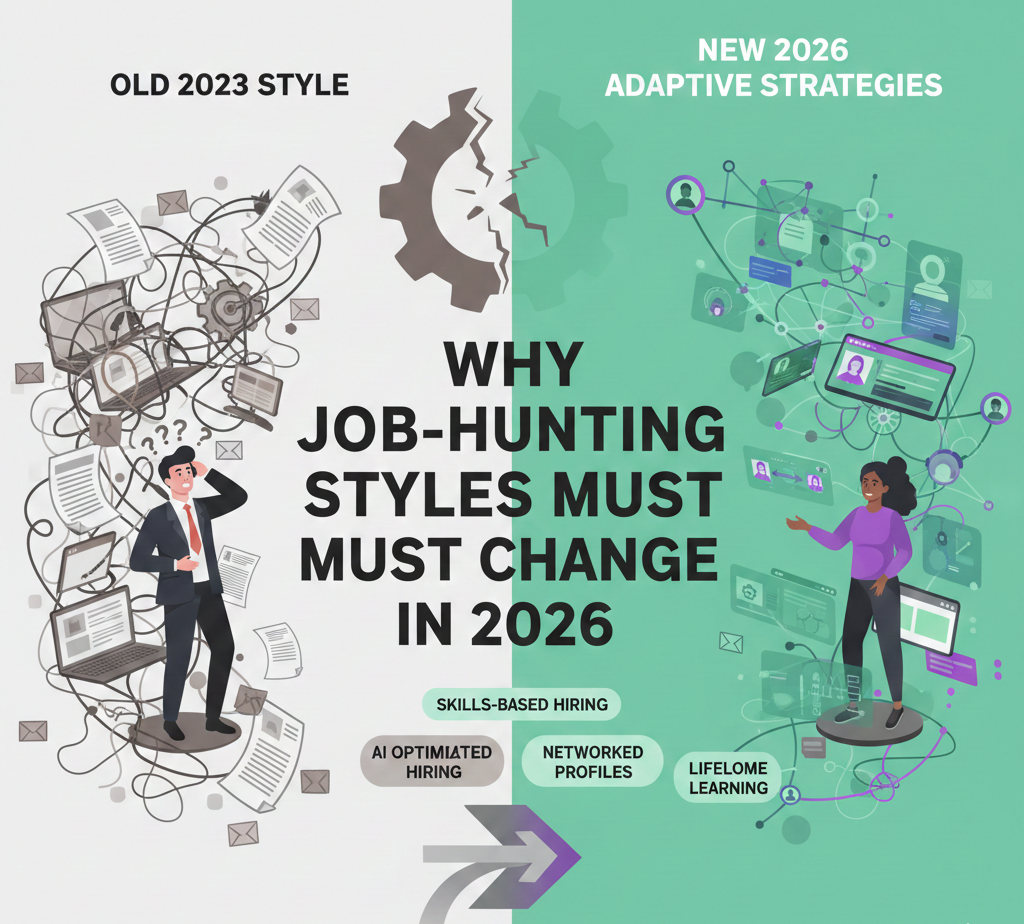
This gap explains why job-hunting styles must change in 2026. Employers now use AI screening, skill validation, and data-driven decision-making. Traditional approaches no longer match how hiring actually works.
To stay competitive, job seekers must rethink how they present skills, apply for roles, and engage with employers.
The hiring market is no longer candidate-friendly
Competition has intensified across industries. Remote work has expanded talent pools globally, increasing pressure on every open role.
Recruiters now receive hundreds or thousands of applications per position. Because of this volume, they rely on automation and fast filtering.
Old job-hunting methods struggle in this environment. Candidates who fail to adapt risk being invisible, regardless of their ability.
AI screening has changed how resumes are judged
Applicant tracking systems and AI tools dominate early hiring stages. These systems do not read resumes like humans.
They scan for structure, relevance, and skill alignment. Context, effort, and intent matter less than clarity and match.
This shift alone proves why job-hunting styles must change in 2026. Candidates must design resumes for machines before humans ever see them.
Skill-first hiring is replacing degree-first hiring
Employers increasingly prioritize skills over credentials. Practical ability now matters more than formal education.
Hiring teams want proof of execution, not just qualification lists. Projects, outcomes, and real-world impact influence decisions.
As a result, candidates who only list degrees or responsibilities lose attention. Modern job-hunting requires evidence-based positioning.
Recruiters expect digital presence and visibility
Recruiters no longer rely solely on applications. They search, observe, and validate candidates online.
LinkedIn profiles, portfolios, and public contributions shape perception. Inconsistent or outdated digital presence creates doubt.
In 2026, job seekers must manage their professional visibility actively. Silence or weak branding sends signals, even unintentionally.
Personalization now beats mass applications
Mass applying once worked because hiring was slower. That era has ended.
Recruiters recognize generic resumes instantly. They prefer candidates who demonstrate understanding of the role and company.
This is another reason why job-hunting styles must change in 2026. Focused, tailored applications outperform volume-based strategies consistently.
Data-driven job search strategies perform better
Successful candidates now track their job search like a system. They analyze responses, optimize profiles, and refine targeting.
Instead of guessing, they use data to improve outcomes. They learn which roles respond and which skills attract attention.
This analytical mindset mirrors how companies hire. Alignment increases selection probability.
Networking has shifted from referrals to relevance
Traditional networking relied on direct referrals. Modern networking focuses on visibility, value, and engagement.
Recruiters notice candidates who share insights, comment thoughtfully, or contribute professionally. Passive connections hold less power.
Job seekers must build relevance before opportunity appears. This strategic shift defines modern career growth.
Modern job platforms demand smarter usage
Job platforms are no longer simple listings. They offer filters, analytics, and targeted opportunities.
Candidates who use these tools strategically gain speed and accuracy. Those who scroll endlessly waste time and energy.
Understanding platform behavior is essential. This knowledge separates proactive job seekers from frustrated ones.
Conclusion
The job market of 2026 rewards adaptability, clarity, and strategic thinking. Old habits no longer match modern hiring systems.
This is exactly why job-hunting styles must change in 2026. Candidates must align with AI screening, skill-first hiring, recruiter psychology, and data-driven decisions.
To apply smarter, faster, and more effectively, use the best job tool built for the modern workforce.
Find Your Dream Job Today – Explore Endless Career Opportunities and Secure Your Next Role with Best Job Tool.






Comments
Be the first to leave a comment.