

Introduction
Employers today look beyond qualifications and experience. They want professionals who take personal ownership of their work and actions. That is why personal responsibility impresses employers across industries.
Personal responsibility reflects maturity, reliability, and accountability. It shows that a candidate can be trusted without constant supervision. In competitive hiring environments, this trait often separates strong candidates from average ones.
This blog explains why personal responsibility impresses employers and how it shapes long-term career success.
The meaning of personal responsibility in the workplace
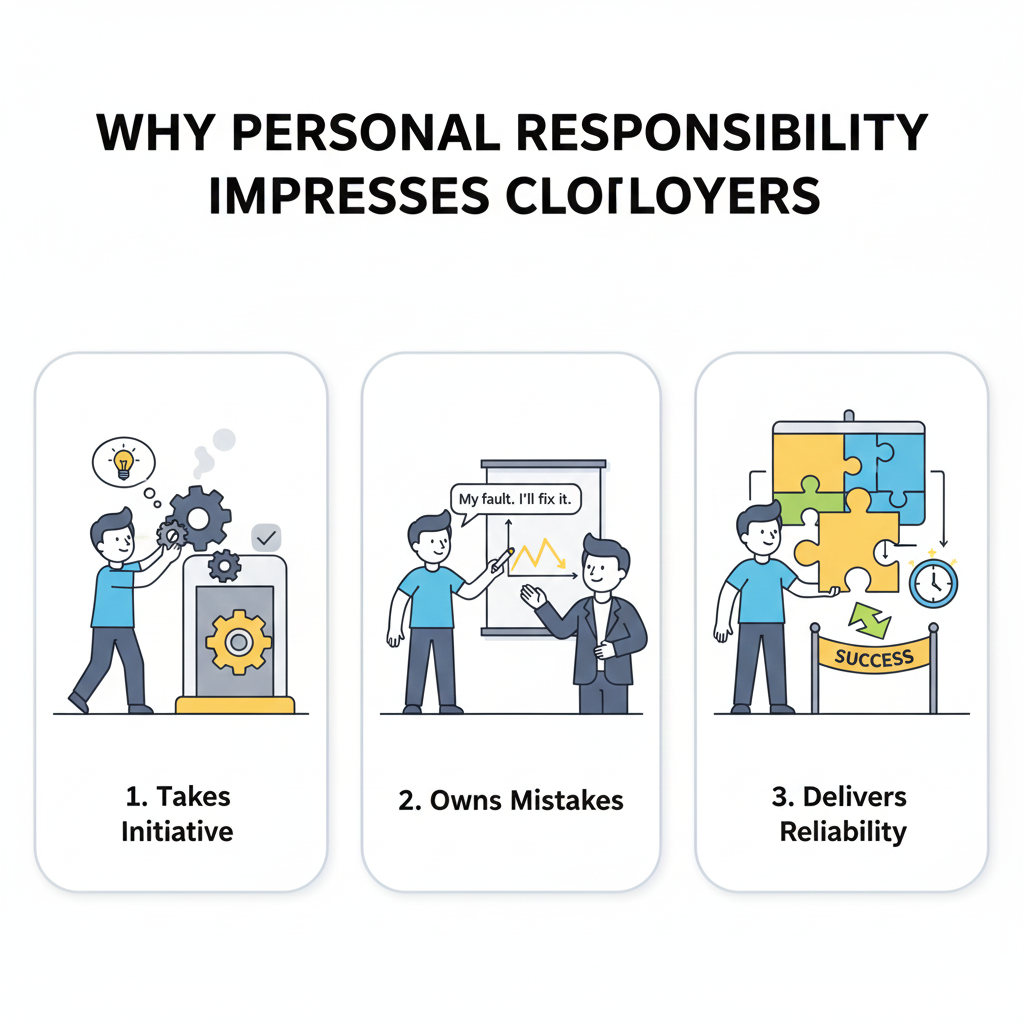
Personal responsibility means owning your actions, decisions, and results at work. It involves taking initiative instead of waiting for instructions. It also includes accepting mistakes without shifting blame.
Employers value this trait because it reduces management burden. Responsible employees require less oversight and deliver consistent results.
When personal responsibility becomes part of your work ethic, it signals professionalism and integrity.
Why employers prioritize responsibility over raw talent
Skills can be taught, but responsibility cannot be forced. Employers understand this reality very well. That is why personal responsibility impresses employers more than technical ability alone.
A responsible employee learns faster and adapts better. They fix problems instead of ignoring them. Over time, they become dependable contributors.
Talent without responsibility often leads to missed deadlines and excuses. Responsibility creates trust, which every organization needs.
How responsibility builds trust with managers and teams
Trust forms when actions match commitments. Personal responsibility ensures that promises turn into results. Managers quickly notice this pattern.
When you take responsibility, managers feel confident assigning important tasks. Teams also rely on you more during critical moments.
This trust leads to better collaboration and stronger professional relationships. As a result, responsible employees often receive more opportunities.
Personal responsibility during hiring and interviews
Interviews reveal more than answers. Employers observe how candidates talk about past experiences. Responsible candidates speak with ownership and clarity.
They acknowledge challenges without blaming others. They explain lessons learned and improvements made. This mindset shows growth and accountability.
That is why personal responsibility impresses employers even before the job begins. It reflects character and self-awareness.
The role of responsibility in career growth
Career growth depends on consistency and reliability. Personal responsibility supports both. Employees who own their work progress faster.
They receive leadership opportunities earlier. They also gain exposure to high-impact projects. Over time, their professional value increases.
Employers promote people they trust. Responsibility creates that trust naturally.
Why responsibility matters in remote and hybrid work
Remote work demands self-discipline and accountability. Employers cannot monitor every task. They rely on personal responsibility instead.
Responsible professionals manage time effectively. They meet deadlines without reminders. Communication remains clear and proactive.
In modern work environments, personal responsibility impresses employers more than ever. It proves you can work independently and deliver results.
Common behaviors that show personal responsibility
Personal responsibility shows through daily actions. Meeting deadlines consistently reflects ownership. Communicating early about challenges shows maturity.
Taking feedback positively also demonstrates responsibility. It shows willingness to improve rather than defend mistakes.
Over time, these behaviors build a strong professional reputation that employers respect.
Developing personal responsibility as a career skill
Personal responsibility develops through self-awareness and discipline. Start by setting realistic commitments and honoring them. Track your tasks and follow through consistently.
Reflect on mistakes instead of avoiding them. Each lesson strengthens accountability. Gradually, responsibility becomes a habit.
As this habit grows, personal responsibility impresses employers naturally and continuously.
Conclusion
Employers value professionals they can trust. That is why personal responsibility impresses employers across roles and industries. It signals reliability, maturity, and long-term potential.
When you take ownership of your work, opportunities follow. Growth becomes consistent personal rather than accidental. Your career moves forward with purpose.
To apply these qualities in the right roles, explore opportunities through the best job tool. It connects responsible professionals with meaningful careers.
Find Your Dream Job Today – Explore Endless Career Opportunities and Secure Your Next Role with Best Job Tool.






Comments
Be the first to leave a comment.