

Introduction
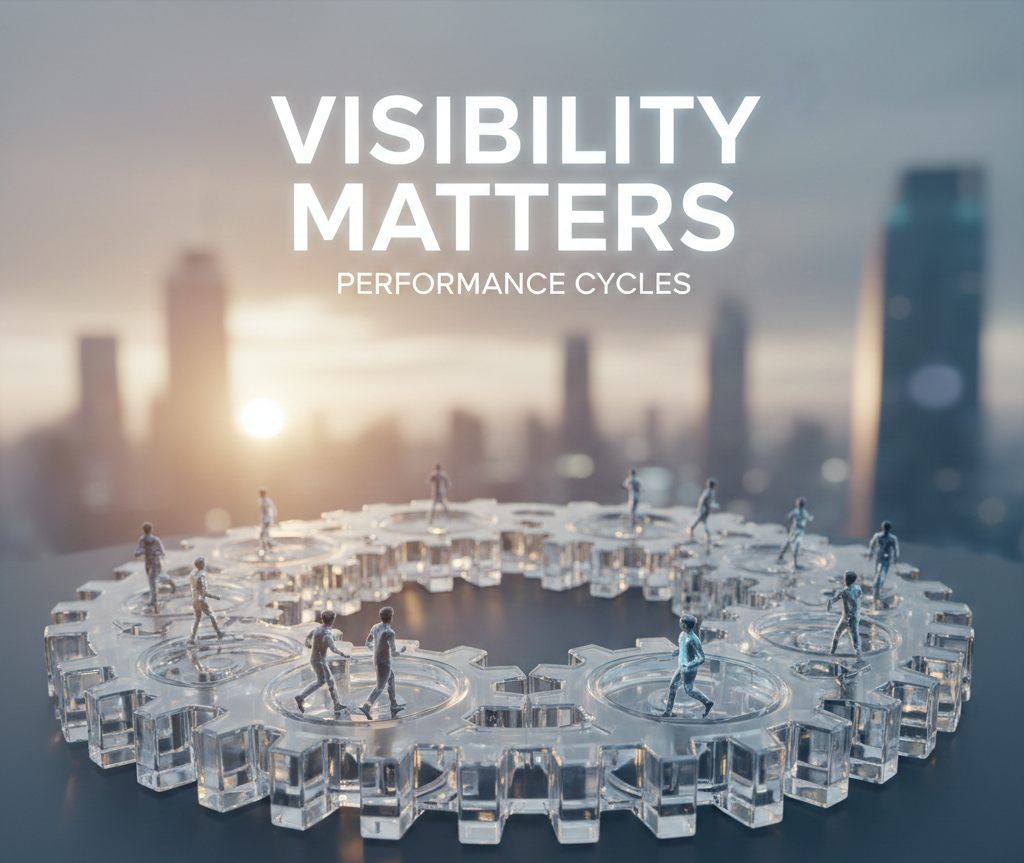
Performance cycles decide raises, promotions, recognition, and future opportunities. Many professionals assume strong work alone guarantees positive outcomes. However, that assumption often leads to disappointment. The reality is simple. Work that is not visible is difficult to evaluate. That is exactly why visibility matters in performance cycles more than most people expect.
Managers evaluate performance based on what they can clearly see, remember, and explain. When contributions stay hidden, even high-quality work loses influence. Visibility ensures that effort, impact, and growth are recognized at the right moments.
Understanding this dynamic helps professionals align their work with how performance decisions are actually made.
What visibility really means at work
Visibility does not mean self-promotion or constant talking. It means making your impact understandable and accessible to decision-makers.
Visibility includes clear communication, documented outcomes, and timely updates. It helps others connect your work to business goals.
When visibility is strong, managers do not have to guess your value. When it is weak, assumptions replace evidence.
How performance cycles actually work
Performance cycles rely on review periods, feedback sessions, and comparison across teams. Managers assess patterns, not isolated moments.
They look for consistency, ownership, and results over time. However, they depend on memory, reports, and visible signals to do this.
If your impact is not present in these signals, it fades during evaluation discussions. This is why visibility matters in performance cycles so strongly.
Why good work alone is not enough
Many professionals focus only on execution. They deliver quietly and expect results to speak for themselves.
Unfortunately, results do not always speak loudly without context. Managers oversee multiple projects and people. They cannot track everything in detail.
Without visibility, even strong contributions blend into the background. This leads to under-recognition, not under-performance.
Visibility shapes perception before evaluations begin
Performance reviews rarely start with a blank slate. Perception forms months before formal evaluations.
Managers begin categorizing people early. They notice who communicates clearly, who owns outcomes, and who shows progress.
Visibility feeds these perceptions continuously. By the time reviews arrive, opinions already exist.
This is why visibility matters in performance cycles long before review meetings happen.
The role of visibility in recall and recognition
Recognition depends heavily on recall. During evaluations, managers recall examples to justify ratings.
Visible work creates clear examples. Invisible work creates gaps.
When managers struggle to recall impact, ratings suffer. Visibility ensures your contributions are easy to remember and defend.
Visibility reduces bias in evaluations
Performance cycles are vulnerable to bias. Recency bias, proximity bias, and familiarity bias affect decisions.
Visibility helps counter these biases. Documented and communicated impact provides objective reference points.
When evidence exists, evaluations rely less on subjective impressions. This leads to fairer outcomes.
How visibility supports ownership perception
Ownership plays a key role in performance cycles. Managers reward people who appear responsible for outcomes.
Ownership becomes visible through communication and follow-through. Silent ownership often goes unnoticed.
When you share progress, decisions, and results clearly, ownership becomes undeniable. This strengthens evaluation outcomes.
Visibility and growth conversations
Growth conversations rely on clarity. Managers must understand what you have already handled before assigning more.
Visibility shows readiness for expanded responsibility. It demonstrates thinking beyond tasks.
Without visibility, managers hesitate to stretch roles. With visibility, growth discussions become easier and more confident.
Common visibility mistakes professionals make
One common mistake is assuming managers already know your impact. Another is sharing updates without linking them to outcomes.
Some professionals fear visibility feels political. In reality, clarity is professional, not political.
Avoiding visibility often harms careers more than it protects them.
How to build visibility without overexposure
Visibility should be intentional and balanced. Share progress at natural milestones. Focus on outcomes, not effort.
Use structured updates, summaries, and documentation. Keep communication factual and relevant.
When visibility feels useful instead of noisy, it strengthens trust.
Visibility across the full performance cycle
Visibility is not a one-time action. It must exist before, during, and after performance cycles.
Consistent visibility builds a narrative over time. That narrative supports evaluations, recognition, and advancement.
This long-term presence explains why visibility matters in performance cycles more than last-minute reminders.
Conclusion
Performance cycles reward what is clear, visible, and remembered. That is why visibility matters in performance cycles as much as skill and effort.
When your impact is visible, evaluations become fairer. Recognition becomes consistent. Growth conversations become easier.
To apply this understanding in the right opportunities and teams, use the best job tool to find roles that value clarity, ownership, and visible impact.
Find Your Dream Job Today – Explore Endless Career Opportunities and Secure Your Next Role with Best Job Tool.






Comments
Be the first to leave a comment.