


Introduction
Discipline is very important for every person. With discipline, you can complete every task on time and efficiently, whether it is related to your job or personal life. However, many people think discipline means following a strict plan and achieving perfection. In reality, discipline does not mean strict rules—it means setting your goals and taking steps that lead to success in your career.
Discipline does not mean getting frustrated while following rules. It simply means consistently putting effort into your work while also taking breaks when needed.
Understanding Rigidity vs. Flexibility
Most people think of discipline as strict rules, but there is a difference between rigidity and flexibility, and understanding this is very important. Rigidity is an approach where you follow strict rules and expect everything to be perfect, which can sometimes lead to frustration.
Flexibility, on the other hand, means connecting discipline with the realities of life. It involves accepting mistakes and keeping yourself motivated.
Rigidity may give short-term results, but for long-term results, flexibility is more important because it focuses on consistency rather than perfection.
Ways to Build Discipline Without Being Rigid
1. Set realistic goals to Build Discipline
The first tip to build professional discipline is setting clear goals and priorities. We need to decide our goals in advance for everything—whether it is our job or our personal life. Goals are very important in every area because without goals, we become confused about what work we need to do, when to do it, and how to do it.
When you clearly know what you want to achieve and what matters most, you can plan your steps accordingly and manage your work in a smooth flow. As a result, your career gradually moves toward success.
2. Time Management Without Stress
Time management and routine building are also very important for professional discipline. When you follow a routine and manage your time well, work gets done faster and more efficiently, without unnecessary pressure.
With a proper routine and time management, you do not waste your time, which helps you stay productive all the time and complete your work within deadlines. This increases reliability in your professional life—people trust you more—and you are able to achieve the goals you aim for. Just remember one important thing: always include small breaks in your routine to avoid burnout.
3. Emotional Intelligence to Build Discipline
Emotional intelligence improves communication and understanding between team members. When team members understand the emotions of each other’s than communication becomes clearer and respectful. People can share ideas freely in this environment and collaboration becomes strong naturally, which improves productivity and creativity.
Conflict is normal in teamwork but emotionally intelligent people handle that calmly. They listen to others and try to understand the situation instead of reacting immediately. It helps to decrease unnecessary misunderstandings and problems get solved easily which helps to create a healthy and peaceful work environment.
When team members understand each other’s emotions and perspectives then they build trust for each other. Emotionally intelligent people show empathy and value everyone’s contribution. It creates mutual respect for everyone in the team and everyone feels important.
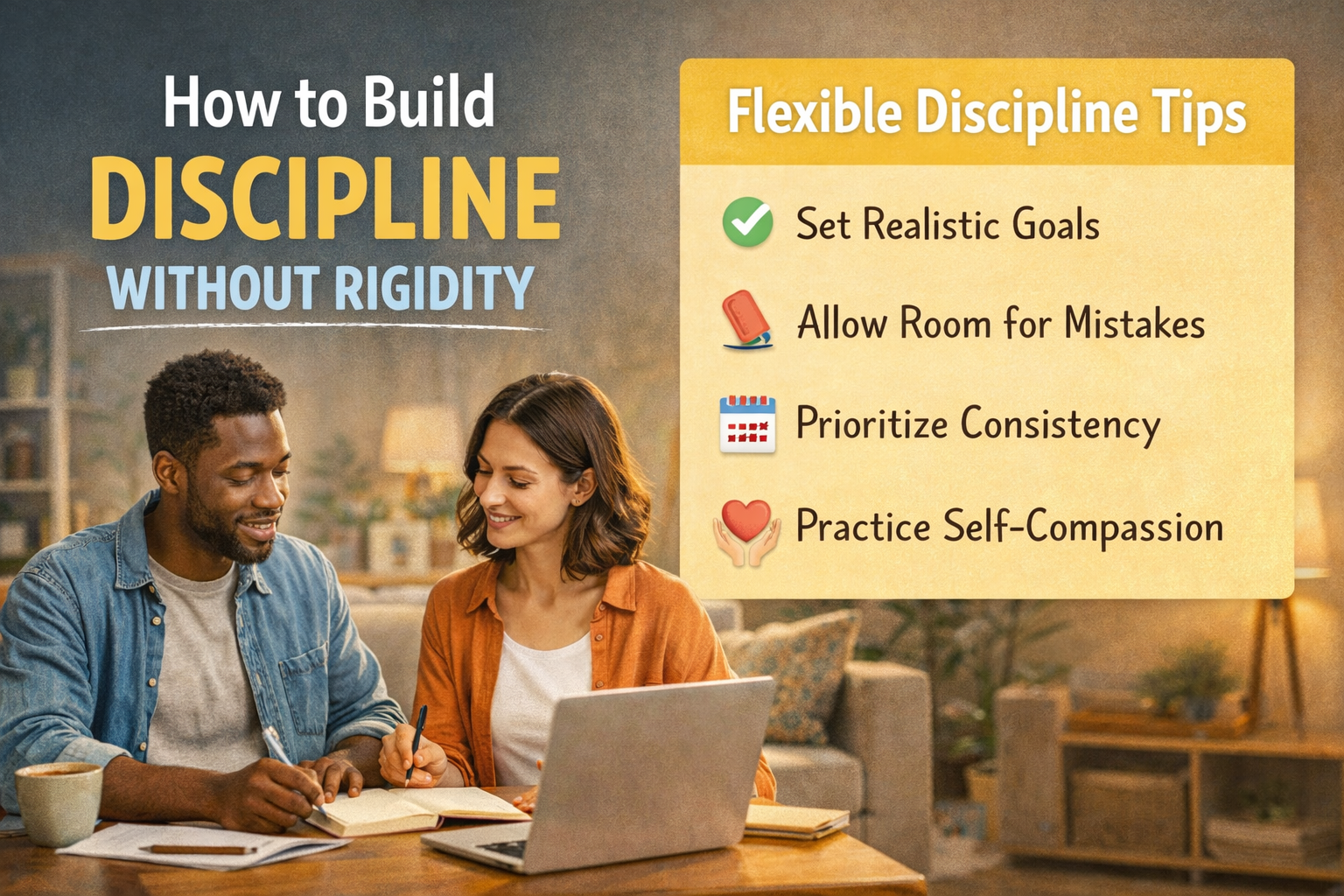
4. Prioritize consistency over perfection
Another important tip is consistency and reliability. These two are strong signs of professional discipline. Consistency means completing your work every day with the same level of effort and dedication, while reliability means that people can depend on you.
Completing your work with quality, meeting deadlines, and following rules daily shows your consistency. When other employees see how well you perform your work, they start trusting you, which builds reliability. Because of this, managers and teammates begin to prefer you for important tasks, and as a result, new opportunities come your way.
5. Managing Distractions and Building Focus
Distractions are everywhere, whether you are at work or at home. Managing these distractions is very important; otherwise, you may not be able to complete your work properly, which can harm your professional image.
The first step to managing distractions is to identify your major distractions, such as mobile phones, social media, and constant notifications. Try to control them with simple actions like keeping your phone on silent and closing unnecessary tabs. When you learn to avoid distractions, your performance automatically improves, and this becomes an important part of your professional discipline.
6. Self-Motivation and Accountability
Self-motivation and accountability are the most important parts of professional discipline. Self-motivation is essential to complete our work properly and on time. It begins with understanding why your work matters. To improve self-motivation, you can give yourself small rewards after completing tasks.
Accountability ensures that discipline is maintained over time, which is why it is equally important. You can build accountability through simple habits such as reviewing your daily performance, maintaining a task journal, or setting clear deadlines for yourself.
You can also read “How to Build Professional Discipline”.
Conclusion
Discipline doesn’t mean following strict rules blindly, and rigidity often leads to stress and burnout. True, healthy discipline is about consistency, adaptability, and self-compassion.
When you approach discipline in a flexible and compassionate way, you can achieve your goals sustainably while staying mentally strong. Start small, stay consistent, and guide yourself gently. Discipline becomes meaningful only when it makes your life easier, balanced, and more sustainable, not stressful.
You can read more such blogs here.






Comments
Be the first to leave a comment.