


Introduction
Freelancing offers freedom, flexibility, and the power to control your income, but asking for more money can still feel intimidating. Many freelancers know they’re undercharging but fear that increasing rates will scare clients away. The truth is, raising your freelance without losing clients rates isn’t just about making more money; it’s about valuing your skills, time, and experience.
As you grow in your career, your expertise becomes more refined, your work becomes faster and more effective, and your results become more valuable. Yet, if your rates don’t evolve with your capabilities, you risk stagnation. Clients, surprisingly, often expect rate increases when handled professionally; they interpret it as a sign of growth and reliability.
This guide will show you how to increase your freelance rates without losing clients, blending strategy, timing, and communication. Whether you’re a designer, developer, writer, or consultant, the principles remain the same: demonstrate value, set expectations, and build confidence in your worth.
Know When It’s Time to Raise Your Rates
Recognizing Your Growth and Market Value
The first step in raising your freelance rates is understanding when it’s the right time. If you’ve been working with the same rates for over a year or consistently delivering high-quality work that exceeds expectations, it’s time for a review.
Several signs indicate that you’re undervaluing yourself. Perhaps you’re fully booked and turning down new projects. Maybe you’ve gained new certifications, specialized skills, or impressive results for your clients. Or you’ve realized your competitors are charging 20–30% more for similar work. All these are strong signals that it’s time to reprice your services.
Freelancing, unlike traditional jobs, doesn’t come with automatic annual raises; you have to create them. A good practice is to review your pricing every 6–12 months. Conduct a quick market analysis by checking freelance platforms like Upwork, Fiverr, or LinkedIn to see what professionals in your niche are charging. Aligning your rates with industry standards gives you confidence and justification when presenting new prices to clients.
Why Clients Often Expect a Rate Increase
Clients understand that skilled freelancers evolve. When you’ve been working with someone long-term, they see your growing efficiency, creative input, and business understanding. That’s why, when communicated clearly, most clients accept rate increases; they view it as a sign that they’re partnering with a professional who’s growing in value.
Communicate Your Rate Increase Professionally
Crafting the Right Message
Raising rates isn’t just a numbers game; it’s a communication skill. The way you present your rate increase determines how clients will react. Transparency, timing, and tone are crucial.
Start by giving your clients advance notice, ideally 30 days before the new rate takes effect. This gives them time to adjust budgets or discuss upcoming projects. Always communicate via email or a formal message, and avoid sudden changes without context.
Here’s a simple template you can personalize:
“Hi [Client Name],
Working with you over the past year has been an incredible experience, and I truly appreciate the trust you’ve placed in my work. As my skills and workload have evolved, I’m updating my rates to better reflect the value and quality I bring to each project. Starting [Date], my new rate will be [$X/hour or per project]. I’m committed to continuing to deliver the same level of quality and reliability that you expect. Thank you for your continued partnership!”
This polite yet assertive approach shows professionalism, not desperation.
Timing Matters More Than You Think
Timing can make or break your rate negotiation. Never announce an increase during a crisis, urgent deadline, or conflict. Instead, choose a positive moment, perhaps after completing a successful project or delivering strong results.
You can also align rate reviews with the start of a new quarter or year. This feels natural to clients, as many businesses review budgets and contracts around these times.
Justify Your Value with Results, Not Words
Show What’s Changed Since You Started
The key to raising your rates successfully is demonstrating tangible value. Clients won’t object to paying more when they clearly see how your work has benefited them. Highlight improvements like faster turnaround times, better engagement metrics, increased sales, or more polished deliverables.
For example, if you’re a copywriter, show how your content improved freelance without losing clients website conversions. If you’re a designer, present analytics showing higher user engagement. If you’re a marketer, mention ROI improvements. The more specific and data-driven your examples, the stronger your case.
Instead of saying, “I’ve improved,” say, “Since our last project, my designs have helped three clients achieve 40% more engagement. I’ve also completed an advanced UX certification that enhances my ability to deliver results.” This shows measurable growth.
Use Testimonials and Case Studies
Social proof is powerful. When potential or existing clients see what others are saying about your results, your rate increase becomes easier to justify. Collect testimonials or short reviews from happy clients. Even a one-line LinkedIn recommendation adds credibility.
If possible, turn your past projects into brief case studies showing challenges, your solutions, and results achieved. Sharing these examples in your proposal or portfolio reinforces the fact that your higher rate is tied to higher value.
Make It Easy for Clients to Say Yes
Offer Options and Flexibility
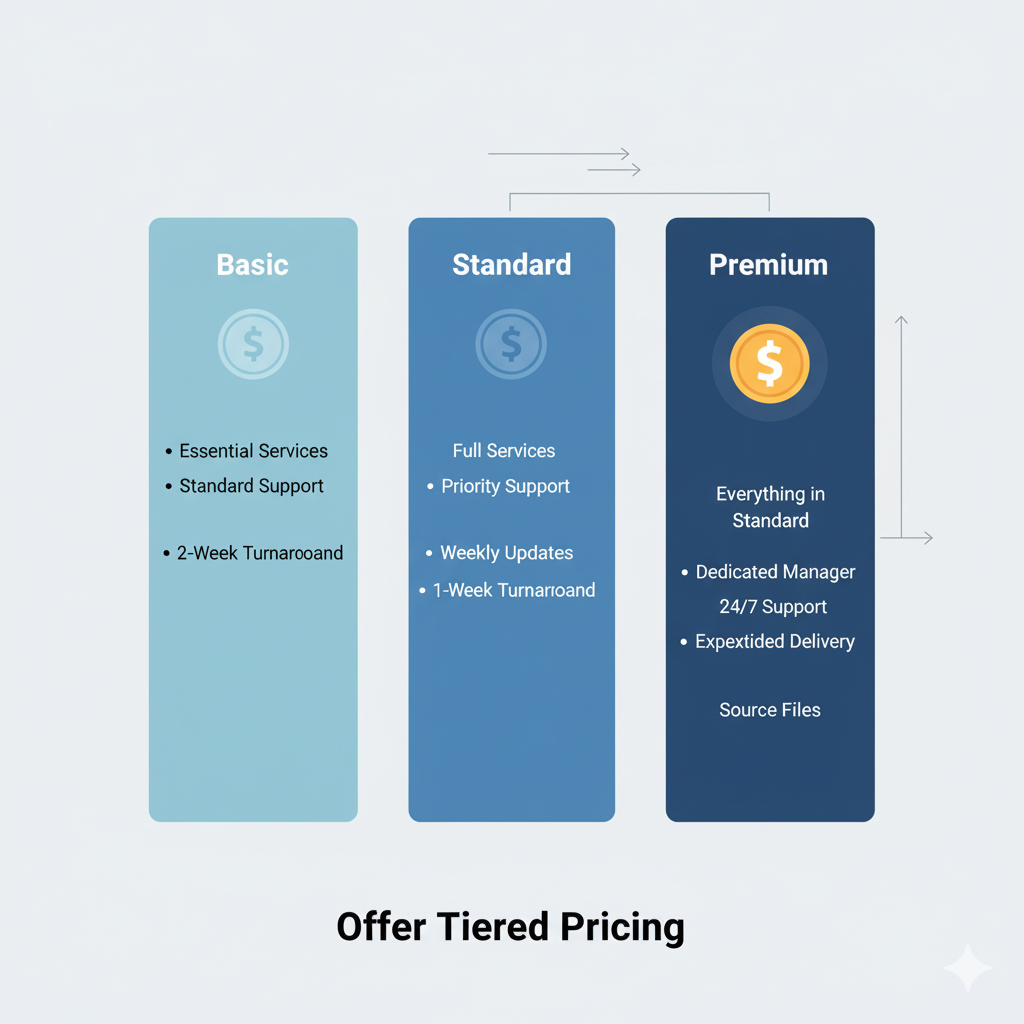
When you raise your rates, some clients might hesitate, not because they don’t value your work, but because their budgets are limited. Instead of losing them, offer flexible options. For instance, you can propose different pricing models, such as:
- Retainer packages with discounted monthly rates.
- Tiered service levels (basic, standard, premium).
- Project-based pricing instead of hourly rates.
This flexibility helps you retain long-term clients while making your pricing structure feel fair. You can also remind clients that rate increases allow you to dedicate more time, creativity, and focus to their projects.
Retain Clients Through Consistent Value
Remember, clients hire freelancers to freelance without losing clients make their lives easier. If your work consistently solves problems, saves them time, or drives growth, they won’t look elsewhere over a small price change. In fact, many clients associate higher prices with higher professionalism.
However, balance is key. Avoid doubling your rates overnight. Gradual increases, say 10–25% are easier to digest and maintain trust.
You can also sweeten the transition by offering to keep existing clients at a slightly lower rate than new ones, rewarding loyalty while still moving upward.
Strengthen Your Brand to Support Higher Rates
Position Yourself as a Specialist, Not a Generalist
Clients pay more to experts than to generalists. When you specialize in a niche, say “SaaS copywriting” instead of general “content writing,” you instantly differentiate yourself. Your positioning should reflect your expertise, results, and understanding of that specific market.
Update your online presence accordingly. Refresh your freelance without losing clients website, LinkedIn profile, and portfolio with targeted messaging that highlights your niche, success stories, and testimonials. Use a consistent brand voice across all platforms to signal professionalism and confidence.
Invest in Personal Branding and Visibility
Freelancers who invest in personal branding often find it easier to charge premium rates. Publish thought-leadership content on LinkedIn, write blog posts about your industry, or share case studies. Visibility creates perceived authority, and authority justifies higher pricing.
If you want to go a step further, create a personal website with testimonials, detailed services, and case studies. Include phrases like “trusted by global brands” or “specialized in B2B marketing” to build social proof and client confidence.
In the digital economy, your online presence is your storefront. The more professional and consistent it looks, the more likely clients will accept your rate adjustments without hesitation.
Conclusion: Confidence and Communication Are Your Strongest Tools
Raising your freelance rates isn’t just about asking for more money; it’s about recognizing your growth, setting boundaries, and ensuring your career remains sustainable. When you combine skill improvement, strong communication, and a clear value proposition, clients will view your rate increase as a natural progression, not a demand.
Remember, clients don’t leave because your rates go up; they leave if they no longer see value. Keep delivering exceptional results, maintain transparency, and show that your growth benefits them too.
The freelancing world rewards confidence, not hesitation. Every step you take toward aligning your rates with your worth helps you attract better clients, do more meaningful work, and build a long-term, profitable career.
Find Your Dream Job Today Explore Endless Career Opportunities and Secure Your Next Role with Best Job Tool






Comments (6)
Can you be more specific about the content of your article? After reading it, I still have some doubts. Hope you can help me.
I don’t think the title of your article matches the content lol. Just kidding, mainly because I had some doubts after reading the article. https://www.binance.bh/register?ref=QCGZMHR6
Your article helped me a lot, is there any more related content? Thanks!
Can you be more specific about the content of your article? After reading it, I still have some doubts. Hope you can help me.
Thank you for your sharing. I am worried that I lack creative ideas. It is your article that makes me full of hope. Thank you. But, I have a question, can you help me?
Thank you for your sharing. I am worried that I lack creative ideas. It is your article that makes me full of hope. Thank you. But, I have a question, can you help me? https://www.binance.info/register?ref=IHJUI7TF