

Introduction
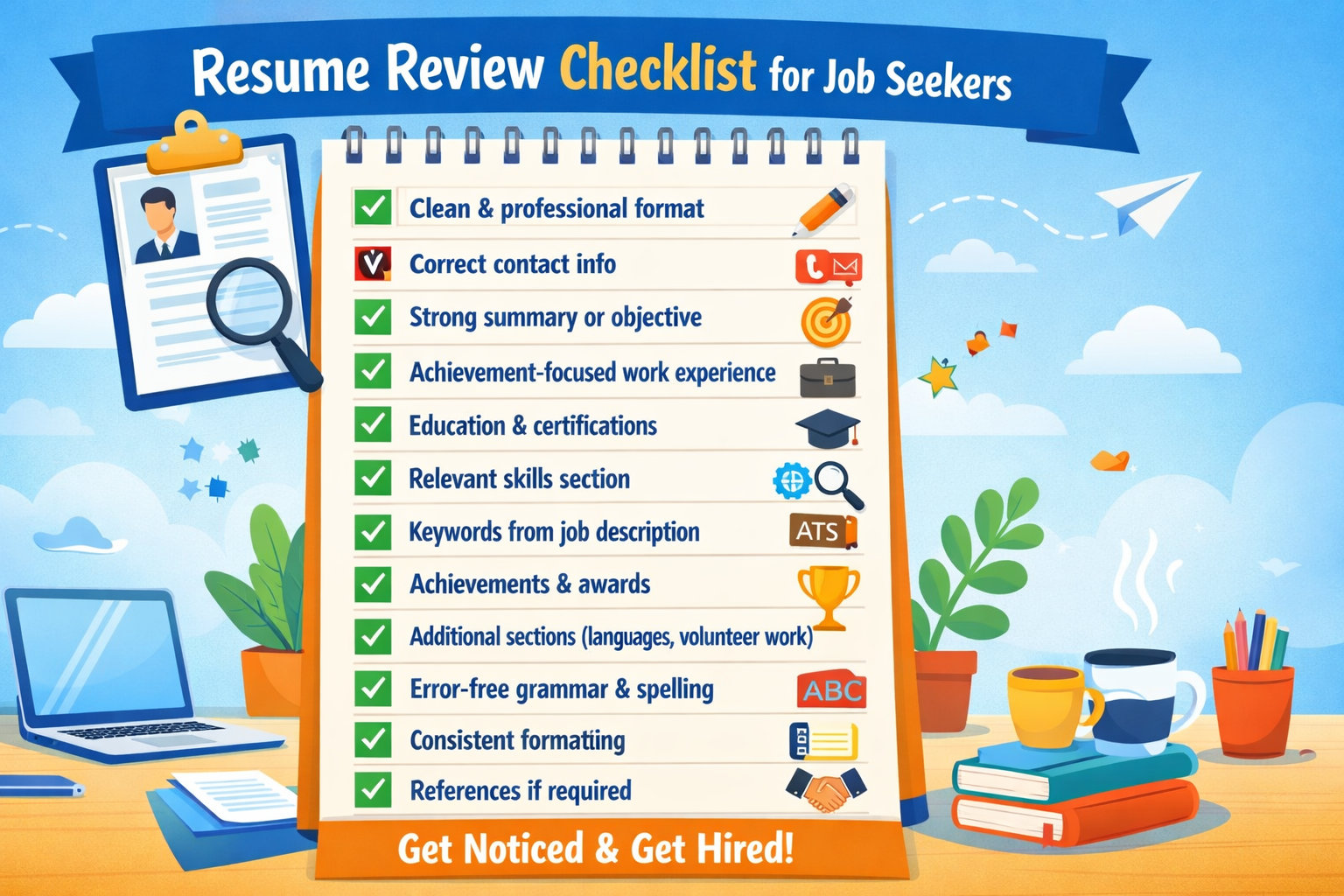
A resume is the first impression you make on a recruiter. It is the key document that can either open the door to an interview or close it immediately. Recruiters often receive hundreds of resumes for a single job opening, which means they only spend a few seconds on each resume initially. Therefore, understanding what recruiters look for and creating a resume that meets their expectations is extremely important. There is a resume review checklist used by recruiters.
In this article, we will discuss the resume review checklist used by recruiters. This checklist will help you understand what makes a resume stand out and what common mistakes to avoid.
Resume Review Checklist Used by Recruiters
1. Formatting and Layout
The first thing a recruiter notices is the appearance of your resume. A clean and professional layout increases readability and creates a positive impression. Recruiters follow these guidelines:
- Clear structure: Use headings like Education, Work Experience, Skills, and Achievements. This helps the recruiter quickly find the information they need.
- Consistent font and size: Use simple fonts like Arial, Calibri, or Times New Roman, with a font size of 10–12 for the body text and 14–16 for headings.
- Margins and spacing: Keep 1-inch margins and proper spacing between sections to avoid a cluttered look.
- No unnecessary graphics: Avoid using fancy graphics, borders, or pictures unless the job requires it (like in design roles).
- Page length: For most candidates, a 1–2 page resume is ideal. Keep it concise and relevant.
Recruiters can immediately reject resumes that look messy or unprofessional. Therefore, first impressions matter a lot.
2. Contact Information
A common mistake candidates make is missing or incomplete contact information. Recruiters need your details to contact you if your resume passes the initial screening.
- Include full name, phone number, and professional email address.
- Optional: LinkedIn profile or portfolio link (especially for creative or technical roles).
- Avoid using unprofessional email addresses like funny names or nicknames.
Checklist: Make sure your contact information is correct, updated, and visible at the top of your resume.
3. Professional Summary or Objective Resume Review Checklist
Recruiters spend only a few seconds on the first section of your resume. A strong professional summary or objective grabs attention.
- Professional Summary: Summarizes your experience, key skills, and achievements in 3–5 sentences. Suitable for experienced professionals.
- Career Objective: Focuses on your goals and what you want to achieve in your career. Ideal for freshers or career changers.
- Keep it specific, concise, and relevant to the job you are applying for.
- Avoid vague statements like “Looking for a challenging role in a reputed organization.”
Checklist: Make sure your summary highlights what you can do for the company rather than what you want.
4. Work Experience
This is often the most critical section for recruiters. They want to see your skills, accomplishments, and career growth.
How recruiters review work experience:
- Relevance: Your past experience should relate to the job you are applying for. Irrelevant details can be skipped.
- Achievements over duties: Instead of listing responsibilities, highlight measurable achievements. For example:
- Avoid “Responsible for managing a sales team.”
- Use “Managed a team of 5 sales executives, increasing regional sales by 20% in 6 months.”
- Use action verbs: Words like achieved, managed, led, improved, designed make your experience impactful.
- Chronological order: Most recruiters prefer a reverse-chronological format (latest job first).
- Include metrics: Numbers, percentages, and measurable results show impact.
Checklist: Ensure each work experience entry is relevant, achievement-focused, and easy to scan.
5. Education
Recruiters check education to verify your qualifications. Include:
- Degree, major, and institution name
- Graduation year (optional if you are an experienced professional)
- GPA or marks (optional unless required by the employer)
- Certifications, training, and online courses related to the job
Checklist: Only include education details that add value to your application.
6. Skills Section
Recruiters quickly check your technical and soft skills to see if you are a fit for the role.
- Technical skills: Include software, tools, and technologies relevant to the job. Example: Python, Excel, Salesforce, SEO.
- Soft skills: Mention only if you can demonstrate them in your experience. Example: Leadership, Communication, Problem-Solving.
- Avoid generic skills like “Microsoft Office” unless it is a job requirement.
- Use bullet points for easy readability.
Checklist: Make sure your skills section is job-relevant and clearly visible.
7. Resume Review Checklist of Keywords and ATS Compatibility
Many companies use Applicant Tracking Systems (ATS) to scan resumes before they reach a human recruiter. These systems look for keywords from the job description.
- Use keywords exactly as they appear in the job description.
- Avoid spelling mistakes, abbreviations, or uncommon synonyms.
- Keep formatting simple (no tables, images, or complex layouts) so ATS can read your resume.
Checklist: Optimize your resume for both humans and ATS.
8. Achievements and Awards Resume Review Checklist
Highlighting achievements can make your resume stand out from competitors.
- Include professional awards, recognitions, or milestones.
- Quantify achievements wherever possible. Example: “Awarded Employee of the Month for increasing client retention by 15%.”
- Include projects or initiatives that had a measurable impact.
Checklist: Show real results and accomplishments instead of vague statements.
9. Additional Sections for Resume Review Checklist
Depending on the role and industry, additional sections can add value:
- Certifications: Relevant certifications show your commitment to learning.
- Projects: Especially important for IT, engineering, or creative roles.
- Languages: Include proficiency levels (basic, intermediate, advanced).
- Volunteer Work: Shows social responsibility and teamwork skills.
Checklist: Add sections only if they strengthen your profile.
10. Grammar, Spelling, and Punctuation
Errors in grammar or spelling can immediately reduce your chances. Recruiters see mistakes as carelessness or lack of attention to detail.
- Use simple and clear language.
- Avoid long sentences and unnecessary jargon.
- Proofread your resume multiple times or use tools like Grammarly.
Checklist: Ensure your resume is error-free and professional.
11. Consistency
Consistency is key in making your resume look polished. Recruiters notice even small inconsistencies.
- Use consistent tenses (past tense for previous jobs, present tense for current roles).
- Keep bullet points, dates, and formatting uniform.
- Align sections and text properly for a clean look.
Checklist: A consistent resume reflects professionalism.
12. References
Some recruiters may ask for references, but including them directly on your resume is optional.
- You can mention: “References available upon request.”
- Provide professional references only when requested.
Checklist: Include references only if required by the job posting.
Common Mistakes Recruiters Look For
Recruiters often reject resumes for common mistakes that are easy to avoid:
- Typos or grammatical errors
- Too long or too short resume
- Lack of measurable achievements
- Generic professional summary
- Poor formatting
- Irrelevant work experience or skills
- Unprofessional email or social media links
- Missing contact information
Avoiding these mistakes increases your chances of getting noticed.
You can also read “Resume Tips for Non-Traditional Careers”.
Conclusion
A resume is more than just a list of your experiences. It is a marketing document that showcases your skills, achievements, and potential value to the employer. Recruiters use a structured approach and a checklist to review resumes efficiently. By understanding this process and creating a resume that meets their expectations, you can improve your chances of getting an interview.
Always remember: clarity, relevance, and professionalism are key. Follow the checklist, tailor your resume for each job, and keep it error-free. A well-crafted resume is your first step toward career success.
Read more such blogs here.






Comments
Be the first to leave a comment.