

Introduction
In today’s job market, many people are choosing non-traditional career paths. Some change careers after years of experience in a different field. Some work as freelancers, content creators, gig workers, artists, or entrepreneurs. Others take career breaks for personal reasons or learn skills through online platforms instead of formal education.
If you have a non-traditional career, writing a resume can feel challenging. You may worry that recruiters will not understand your background or may judge gaps, career changes, or unconventional roles. However, the truth is that non-traditional careers are becoming more common and accepted. What matters is how you present your experience.
This article will guide you with practical resume tips for non-traditional careers. These tips will help you highlight your strengths, skills, and value in a clear and confident way.
What Is a Non-Traditional Career?
A non-traditional career is any career path that does not follow a straight or standard route. This may include:
- Career changes from one field to another
- Freelancing or self-employment
- Gig work or contract-based jobs
- Creative professions like writing, art, music, or design
- Remote or project-based roles
- Online learning instead of formal degrees
- Career breaks for health, family, or personal growth
These careers may not fit into a typical resume format, but they still involve real skills and experience.
Resume Tips for Non-Traditional Careers
1. Understand Your Career Story First
Before writing your resume, take time to understand your own journey. Ask yourself:
- What skills have I gained across different roles?
- What problems have I solved?
- What results have I achieved?
- How does my experience connect to the job I want now?
Your resume should tell a clear story. Even if your path looks different, it should make sense to the recruiter.
2. Choose the Right Resume Format
For non-traditional careers, the resume format is very important.
Use a Skills-Based or Hybrid Resume
A chronological resume focuses only on job titles and dates. This may highlight gaps or frequent changes. Instead, consider:
- Skills-based resume: Focuses on skills and achievements
- Hybrid resume: Combines skills and work experience
These formats allow you to highlight what you can do, not just where you worked.
3. Write a Strong Resume Summary
Your resume summary is the first thing recruiters read. This section is very important for non-traditional careers.
Tips for a Good Summary:
- Keep it short (3–4 lines)
- Focus on skills, not job titles
- Mention your career direction clearly
Example:
“Creative content writer with 3+ years of experience in blogging, SEO writing, and social media content. Skilled in research, storytelling, and audience engagement. Looking to contribute to a digital marketing team with strong content strategies.”
This helps recruiters quickly understand your value.
4. Focus on Transferable Skills for Non-Traditional Careers
Transferable skills are skills you can use in different jobs and industries. These skills are very important for career changers.
Common Transferable Skills:
- Communication
- Writing and editing
- Problem-solving
- Time management
- Research
- Teamwork
- Leadership
- Client handling
Highlight these skills clearly in your resume. Use real examples to show how you used them.
5. Show Achievements, Not Just Roles
Instead of only listing responsibilities, focus on achievements and results.
Weak Example:
- Managed social media accounts
Strong Example:
- Managed social media accounts and increased engagement by 40% in three months
Numbers and results make your experience more believable and impressive.
6. Explain Career Changes Clearly
If you changed careers, do not hide it. Instead, explain it confidently.
You can:
- Mention your motivation in the summary
- Connect old skills to new roles
- Show learning and growth
Recruiters appreciate clarity and honesty.
7. Include Freelance and Gig Work Properly
Freelance work is real work. It deserves space in your resume.
How to Include Freelance Work:
- Use a title like “Freelance Content Writer” or “Independent Consultant”
- Mention key projects or clients (if allowed)
- Highlight skills and results
Do not treat freelance work as less important.
8. Address Career Gaps Smartly for Non-Traditional Careers
Career gaps are common and normal. You do not need to explain every detail.
How to Handle Gaps:
- Focus on skills gained during the gap
- Mention learning, volunteering, or personal projects
- Keep explanations short
Example:
“Career break for skill development and personal growth. Completed online courses in content writing and SEO.”
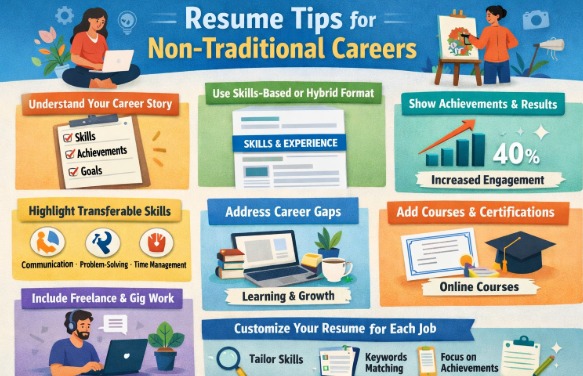
9. Highlight Learning and Certifications
Non-traditional professionals often learn through online courses, workshops, or self-study. Include these clearly.
You Can Include:
- Online courses
- Certifications
- Workshops
- Bootcamps
This shows your willingness to learn and improve.
10. Customize Your Resume for Each Job
Do not send the same resume everywhere. Customize it based on the job description.
How to Customize:
- Match keywords from the job posting
- Highlight relevant skills first
- Remove irrelevant details
This increases your chances of passing applicant tracking systems (ATS).
11. Use Simple and Clear Language for Non-Traditional Careers
Avoid complex words and long sentences. Use simple and clear language.
Tips:
- Use bullet points
- Keep sentences short
- Avoid jargon unless necessary
Clarity makes your resume easy to read.
12. Show Projects and Portfolio Work
For non-traditional careers, projects matter a lot.
Include:
- Personal projects
- Freelance projects
- Volunteer work
- Portfolio links
Projects show practical experience, even if you did not work in a formal job.
You can also read “Why Chronology Matters in Resumes”.
Conclusion
Non-traditional careers are not a weakness. They show flexibility, courage, and adaptability. Many employers today value skills, mindset, and results more than a straight career path.
Your resume should focus on:
- Skills
- Achievements
- Learning
- Clear direction
When written well, a resume for a non-traditional career can stand out and create strong opportunities.
Believe in your journey. Present it clearly. And remember, every career path is valid when you know how to tell your story.
For more such blogs, visit here.





Comments
Be the first to leave a comment.