

Introduction
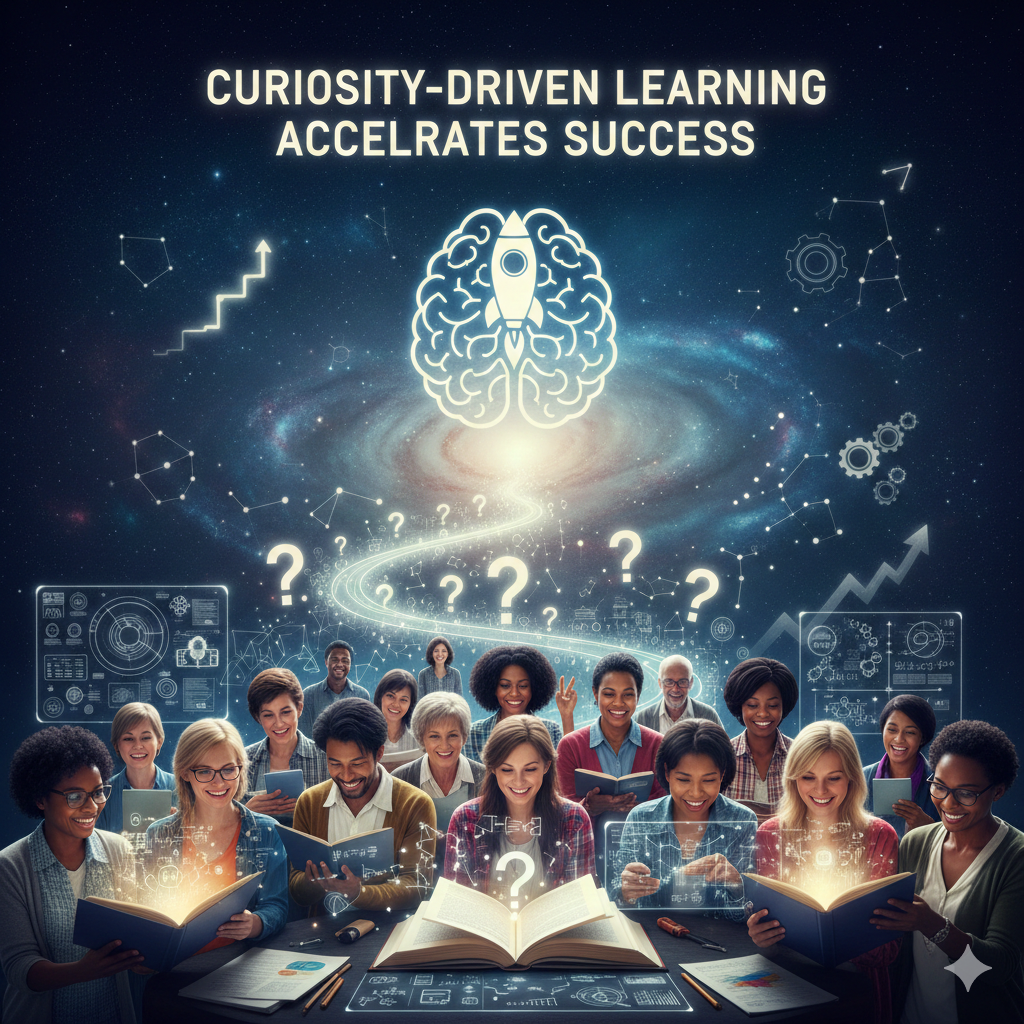
Curiosity-driven learning shapes how people grow in modern careers. It goes beyond textbooks and fixed syllabi. Instead, it follows questions, interests, and real-world problems.
In a fast-changing job market, skills expire quickly. Because of this, curiosity helps people stay relevant. It pushes them to explore, adapt, and learn continuously.
Success today rewards learners who ask better questions. It favors those who seek understanding, not just completion. This is where curiosity becomes a powerful advantage.
Curiosity builds a strong learning mindset
Curiosity turns learning into a habit, not a task. It creates internal motivation that lasts longer than external pressure. As a result, learners stay engaged for years.
When curiosity leads the process, fear of failure reduces. People experiment more freely and learn faster. Therefore, progress feels natural, not forced.
This mindset helps professionals grow even without formal training. They learn because they want to, not because they must. Over time, this habit compounds into success.
Brain science supports curiosity-driven learning
Neuroscience shows that curiosity activates reward centers in the brain. Dopamine increases when people explore new ideas. Because of this, learning feels satisfying.
Curious brains also retain information better. They connect new ideas with existing knowledge. As a result, recall improves naturally.
Moreover, curiosity increases focus. When interest is high, distractions fade. This makes learning deeper and more effective.
Curiosity encourages deeper skill mastery
Curiosity pushes learners beyond surface-level understanding. Instead of memorizing steps, they explore the “why” behind skills. This leads to mastery.
When challenges appear, curious learners dig deeper. They test alternatives and refine approaches. Therefore, their skills become flexible and resilient.
Key ways curiosity supports skill growth include:
- Exploring advanced use cases beyond basic tutorials
- Experimenting with tools instead of following fixed instructions
- Learning from mistakes without frustration
This depth helps professionals stand out in competitive roles.
Curiosity improves problem-solving ability
Curiosity fuels better questions. Good questions lead to better solutions. Because of this, curious learners solve problems faster.
They examine issues from multiple angles. Instead of rushing answers, they explore possibilities. As a result, their solutions feel creative and effective.
In workplaces, this trait is highly valued. Employers trust people who think critically. Therefore, curiosity becomes a career asset.
Curiosity-driven learners adapt faster to change
Industries evolve rapidly. Tools, platforms, and roles shift every year. Curiosity helps learners adapt without fear.
Rather than resisting change, curious people explore it. They see change as an opportunity. This mindset reduces stress and increases confidence.
Adaptable learners stay relevant longer. They reskill proactively instead of reacting late. Because of this, curiosity protects long-term success.
Curiosity strengthens career confidence
Confidence grows from understanding, not guessing. Curiosity-driven learning builds clarity. People know why things work.
This clarity reduces impostor syndrome. Learners trust their ability to figure things out. As a result, they speak up and take initiative.
Curiosity also improves communication. Curious professionals ask thoughtful questions. Therefore, they build stronger workplace relationships.
Curiosity opens unexpected career paths
Many successful careers start with simple curiosity. A side interest often becomes a core skill. Over time, it shapes new opportunities.
Curiosity exposes learners to emerging fields. They explore trends early. Because of this, they enter markets before they become crowded.
Examples of curiosity-led exploration include:
- Learning automation out of interest, then moving into tech roles
- Exploring content tools and shifting into digital marketing
- Experimenting with analytics and transitioning into data careers
These paths rarely follow rigid plans. Curiosity guides them forward.
Curiosity-driven learning fuels long-term success
Short-term learning focuses on quick results. Curiosity-driven learning focuses on growth. This difference defines long-term success.
Curious learners never stop evolving. They stay valuable across roles and industries. Therefore, their careers remain flexible.
Success today rewards exploration and self-direction. Curiosity provides both. It turns learning into a lifelong advantage.
Conclusion:
curiosity is the real success accelerator
Curiosity-driven learning accelerates success because it aligns with how humans grow best. It builds motivation, adaptability, and confidence. Over time, these traits compound.
In modern careers, curiosity matters more than static knowledge. It helps professionals learn faster and pivot smarter. Therefore, investing in curiosity pays lifelong dividends.
If you want to turn curiosity into real opportunities, you need the right platform. Find roles that value growth, learning, and adaptability. Explore openings that match your evolving skills.
Find Your Dream Job Today. Explore endless career opportunities and secure your next role with the best job tool — powered by curiosity-driven growth.






Comments
Be the first to leave a comment.